Seed Packets Only
-
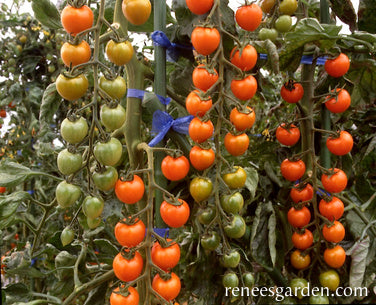
Orange Cherry Tomatoes Sungold
STARTING SEEDS
In early spring, start indoors about 6 to 8 weeks before outdoor night temperatures are reliably in the 50-55°F (10-13°C) range. Sow seeds 1/4 inch deep and 1 inch apart in a container of seed starting mix. Keep moist but not soggy, and very warm, 80°F (27°C). Provide a strong light source until seedlings are ready to plant outside. When seedlings are 2 inches tall, transplant into individual 4 inch pots. Maintain at 70°F (21°C). Feed with half-strength fertilizer every 2 weeks until ready to plant. When nights reach 55°F (13°C), gradually acclimate to outdoor conditions. Plant these vigorous indeterminate climbers 3 feet apart into rich soil in full sun.
GROWING NOTES
Prepare soil well with aged manure or compost. Plant tomatoes several inches deeper than they were growing in containers. Provide strong stakes or tall wire cages at planting time as these plants grow tall with heavy fruit loads. Mulch to provide the even moisture tomato plants need to prevent cracking. Don’t overwater once fruit begins to ripen.
HARVEST AND USE
Pick fruits when fully orange colored; Sungold produces an abundance! Enjoy for sweet and nutritious snacks right out of the garden, in salads, or briefly sauté them in good olive oil until fruits begin to split, then sprinkle with fresh chopped chives or basil.
Regular price $4.99Sale price $4.99Unit price per -
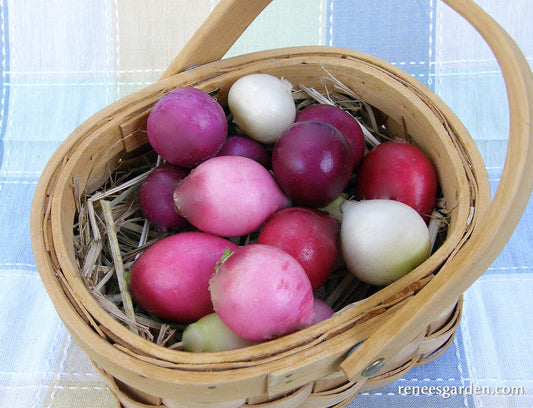
Rainbow Radishes Easter Egg II
START SEEDS OUTDOORS
In early spring as soon as ground can be worked, sow radish seeds in well-worked, fertile soil in full sun. Space seeds 1 inch apart in wide rows 6 inches apart. Keep soil evenly moist and well weeded. If first sowing comes up unevenly, replant right away. Sow in late summer for a fall crop.
GROWING NOTES
Sow this quick growing, cool season crop wherever you intend to plant heat lovers later. Radishes thrive and have crisp flesh and the best mild flavor given consistent moisture. Sow small amounts a week apart to mature before or after summer heat. Thin quick-growing seedlings early to 2 inches apart so roots have room to size up. Protect radishes with floating row covers if marauding birds or flea beetles that chew holes in the leaves are a problem.
HARVEST AND USE
Harvest radishes when roots are the size of large marbles. If weather turns unexpectedly hot, pull, cut off tops, and store in the refrigerator for up to 3 weeks. Radishes will be spicier in hot weather and milder grown in cooler conditions. Combine sliced radishes, scallions and fresh dill or parsley for a great salad. Make delicious open faced sandwiches on whole grain bread spread with sweet butter and topped with sliced radishes.Regular price $3.39Sale price $3.39Unit price per -
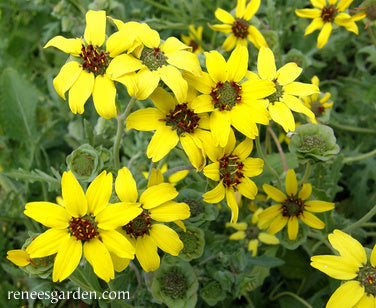
Fragrant Wildflowers Heirloom Chocolate Daisy
PERENNIAL
Hardy to Zone 4
Summer Blooming
Frost HardyTO SOW DIRECTLY OUTDOORS
In spring, several weeks after last frost date, sow in a sunny garden spot with excellent drainage. Sow 2 inches apart and cover lightly. Keep moist but not soggy while awaiting germination. When seedlings are well established, thin to 6 inches apart so plants have room to mature.
TO START EARLY INDOORS
Start seeds indoors about 6 weeks before night temps are above 50°F (10°C). Sow seeds 2 to 3 apart in a container of seed starting mix and cover very lightly. Keep seedbed moist but not soggy while awaiting germination. When outdoor weather is warm and settled both day and night, plant seedlings 6 inches apart in a sunny, well-drained garden spot.
GROWING NOTES
Chocolate daisies, native to the mesas and plains of the Southwest, thrive in average soil, but require good drainage to thrive; if soil is heavy clay, add organic material to improve drainage before sowing. Plant in large groups in full sun near where you walk for maximum fragrance impact. Deadhead spent flowers regularly to encourage reblooming. Blossoms are a important source of nectar for pollinators and beneficial insects. Plants die to the ground in winter, returning in spring and gaining in size over the seasons.
Regular price $4.69Sale price $4.69Unit price per -
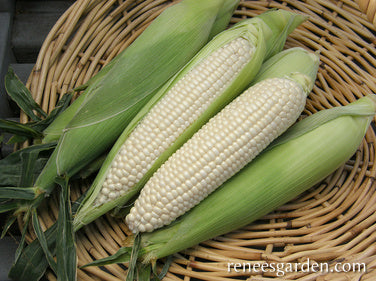
White Corn Sugar Pearl
START SEEDS OUTDOORS
In spring, once weather is warm and settled and night temperatures stay securely above 55°F (13°C), plant seeds in well-worked, fertile soil in full sun. Poke seeds in 1 inch deep and 4 to 6 inches apart. Plant in a block of 4 side-by-side rows, each row at least 1 foot apart. Thin seedlings to 1 foot apart when several inches tall. Protect from marauding birds if necessary. If first sowing doesn’t germinate evenly, replant right away as new seedlings catch up quickly. Make several sowings 2 or 3 weeks apart until early June to have successive harvests.
GROWING NOTES
There is no need to isolate Sugar Pearl from other varieties, but plant seeds in blocks of at least 4 parallel rows to ensure good wind pollination and well filled out ears. Corn is a heavy feeder, so add plenty of compost or aged manure to the soil at sowing time, and then fertilize when young plants are 7 to 8 inches tall and again as ears begin to form.
HARVEST AND USE
Well filled out ears of corn are ready to eat when the silks are very dark brown but not dried out. Test by choosing a plump ear and peeling back the husk very slightly. The kernels should be tender and milky when slit with a fingernail. Sugar Pearl is a SE corn, so the tender crisp kernels will hold their sweetness after harvest.
Regular price $4.99Sale price $4.99Unit price per -
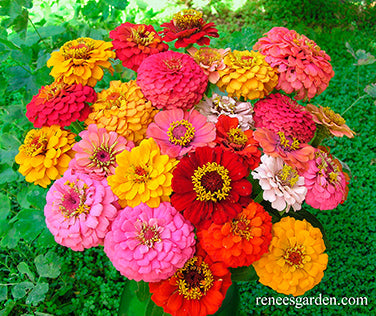
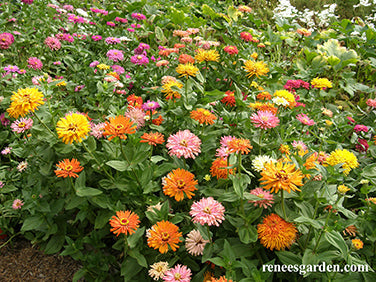
Heirloom Zinnias Cut and Come Again
ANNUAL
Summer/fall bloom
Frost tenderTO START DIRECTLY IN THE GARDEN
Sow seeds in a well-worked seed bed in full sun when danger of frost is past and weather is warm and above 50°F (10°C) both day and night. Space seeds 3 inches apart in rows 12 inches apart, cover about 1/2 inch deep and gently firm soil. Keep soil evenly moist while awaiting germination.
TO START EARLY INDOORS
Four to five weeks before last frost date, sow seeds 1/2 inch deep and 3 inches apart in a container of seed starting mix. Keep warm and moist and provide a strong light source until seedlings are ready to plant outside when temperatures rise above 50°F (10°C) day and night.
THIN OR TRANSPLANT
Space seedlings 12 inches apart when large enough to handle to give plants room to mature and provide good air circulation.
GROWING NOTES
Zinnias grow readily in ordinary garden soil in full sun. For large and abundant flowers, thin before seedlings get crowded; adequate spacing and regular, even watering helps keep zinnias productive and discourages mildew. Pick when flower blossoms first open and petals are tight for longest vase life. Cut long stems well back into the plant to keep plants branching low and producing best blooms for summer long bouquets.Regular price $2.99Sale price $2.99Unit price per -
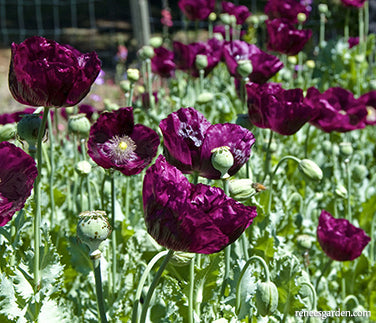
Heirloom Poppies Lauren's Dark Grape
HARDY ANNUAL
Spring/summer bloom
Frost hardySTART SEEDS OUTDOORS
Plant poppies either in late fall or very early spring. (Fall-sown seeds will overwinter and germinate when soil warms in early spring.) If spring planting, sow in a fine-textured garden bed in full sun as early as the ground can be worked.
Broadcast seeds as thinly and evenly as possible and rake in gently, or lightly cover 1⁄8 inch deep. Keep seedbed moist. Seedlings emerge in 7 to 14 days. If seedlings come up very thickly, thin poppies early but delay final thinning until weather is settled in spring.
THIN OR TRANSPLANT
Poppies don’t transplant well, so sow directly in the garden. Thin early if crowded, then again to a final spacing 8 to 10 inches apart.
GROWING NOTES
Sow seeds early if spring planting, as poppies can handle frosts and bloom best when plants get a good start in cool spring weather. To help space the tiny seeds, try mixing them with a little dry sand before sowing. Weed and water young seedlings and thin carefully to final spacing once well established because poppies need room to grow and mature. Prolong bloom by removing spent flowers.
Regular price $3.69Sale price $3.69Unit price per -
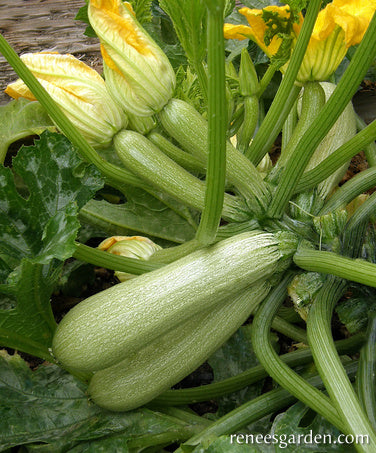
Heirloom Italian Zucchini Ortolana di Faenza
START SEEDS OUTDOORS
Zucchinis need full sun, rich fertile soil and warm temperatures. Plant only when spring weather is warm and night temperatures stay above 50°F (10°C). Sow groups of 2 to 3 seeds,1 inch deep, every 2 feet, in rows 3 feet apart. Thin to leave only 1 seedling every 2 feet. Or, plant in slightly mounded hills, 2 feet in diameter, sowing 5 or 6 seeds in each hill. Thin hill-planted seedlings to 2 or 3 strongest plants.
GROWING NOTES
Amend soil well before sowing with lots of aged manure or compost. Protect young seedlings from marauding birds by covering with plastic berry baskets at planting time, removing when plants get crowded. Be sure to thin properly — you will have more productive, disease-free plants if seedlings have enough room to mature.
HARVEST AND USE
Harvest zucchini when no more than 5 to 6 inches long for best flavor. Frequent harvesting keeps plants producing tasty new fruits instead of maturing fat, tough, huge ones. Steam, stir-fry or grill sliced zucchinis and sprinkle with fresh parsley, dill, basil or thyme. Try the tasty blossoms sautéed or stuffed and baked. Heap a platter with spears of baby zucchinis to serve with your favorite dip for appetizers or snacks.Regular price $4.89Sale price $4.89Unit price per -
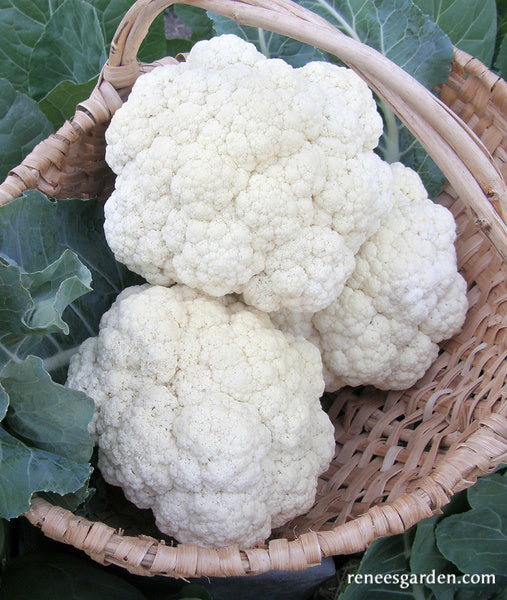
Cauliflower Amazing Taste
BEST TO START INDOORS
Start seeds 4 to 5 weeks before last expected frost. Sow 1 inch apart in a container of seed starting mix and cover 1/4 inch deep. Keep moist but not soggy. Provide a strong light source until seedlings are ready to plant out. When seedlings have 2 to 3 sets of true leaves, acclimate to outdoor conditions and transplant 12 to 18 inches apart into rich, well-drained soil in full sun. In mild winter climates, sow again in mid-summer for a fall crop.
TO START OUTDOORS
About 4 to 6 weeks before last frost, sow groups of 2 to 3 seeds 12 to 18 inches apart and 1/4 inch deep in well-drained, fertile soil in full sun. Tend carefully and thin to 1 strong seedling per group when several inches tall. Proper thinning is critical for successful heads.
GROWING NOTES
Fertilize growing cauliflower every three weeks and keep well weeded and watered to provide the rapid growth cauliflower requires to form good heads. Amazing Taste’s outer wrapper leaves help shield its heads from sun discoloration. Harvest the pure white heads promptly when fully filled out. Nontoxic “BT” (Bacillus thuringiensis) products work well to control caterpillar pests.
HARVEST AND USE
Enjoy Amazing in salads, with dips, or break into florets and lightly steam or toss with olive oil and roast till tender. Note: Cauliflower will cook more quickly when fresh from the garden.
Regular price $4.69Sale price $4.69Unit price per -
Heirloom Radishes German Giant
START SEEDS OUTDOORS
In early spring as soon as ground can be worked, sow radish seeds in well-worked, fertile soil in full sun. Plant seeds 1/2 inch deep and 1 inch apart, in wide rows 6 inches apart. Keep soil evenly moist and well weeded. If first sowing comes up unevenly, replant right away. Sow again in late summer for a fall crop.
GROWING NOTES
Sow this quick cool season crop wherever you intend to plant heat lovers later. Radishes thrive with crisp flesh and mild flavor when given consistent moisture. Sow small amounts a week apart to mature in warm but not hot weather. Thin quick-growing seedlings early to 2 inches apart so roots have room to size up. Protect radishes with floating row covers if marauding birds or flea beetles that chew holes in the leaves are a problem.
HARVEST AND USE
Pull young round roots at large marble size. If weather turns hot, harvest, cut off tops and store in fridge. Radishes’ flavor is mildest in cool weather, spicier in hot conditions. Picked young and tender, radishes make crispy snacks and add appealing color and crunch to green salads. Delicious sliced and used for dipping with hummus or other creamy spreads.
Regular price $4.89Sale price $4.89Unit price per -
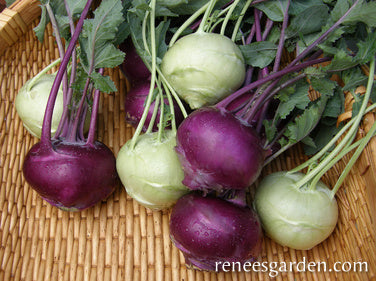
Gourmet Kohlrabi Crispy Colors Duo
TO START SEEDS DIRECTLY IN THE GARDEN
In early spring, as soon as ground can be worked, plant in well-drained, fertile soil in full sun. Sow seeds 1 inch apart in rows 6 to 8 inches apart. Cover 1/2 inch deep and keep soil evenly moist for good germination. When seedlings are 3 inches tall, thin to stand 4 to 6 inches apart, ensuring that the bulbs have enough room to grow rapidly. Sow again in late summer for another crop.
TO START EARLY INDOORS
Start seeds 4 to 5 weeks before last expected spring frost. Sow 1 inch apart in a container of seed starting mix, cover 1/2 inch deep and keep evenly moist. Provide a strong light source until ready to plant out. When 3 inches tall, transplant seedlings 4 to 6 inches apart into rich, well-drained soil in full sun.
GROWING AND HARVEST
Plant in rich fertile soil. Fertilize regularly and water consistently to ensure the steady growth that produces the best tasting, sweetest kohlrabi. Harvest when bulbs are about 2 to 3 inches in diameter. Peel, slice and enjoy their crisp flesh raw or cook and serve mashed with butter, in soup or with a cream sauce.
Regular price $3.99Sale price $3.99Unit price per -
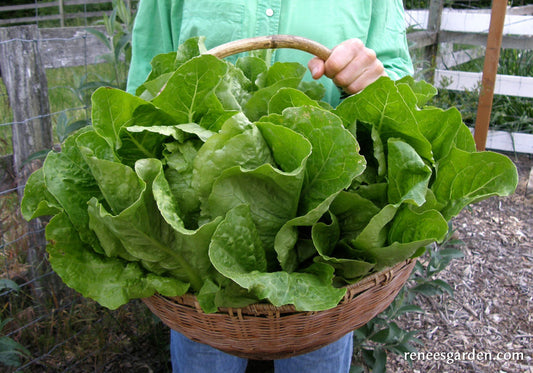
Heirloom Romaine Lettuce Jericho
START SEEDS OUTDOORS
In cool early spring weather, start seeds in finely worked soil in full sun. Sow 1/4 inch deep and 2 inches apart in rows 6 to 8 inches apart and cover lightly. Tend carefully and keep evenly moist. Gradually thin out extra seedlings, leaving remaining plants standing 12 inches apart so lettuces have room to size up and fully mature into big butterhead rosettes. For a constant supply, make several sowings a few weeks apart until summer weather turns hot. Plant again in late summer for fall harvest.
GROWING NOTES
Lettuce thrives in cool conditions with consistent moisture. Weed, water and be sure to thin carefully to proper spacing for best quality heavy heads. If birds are attracted to young seedlings, cover with floating row covers or netting. Make a shade structure in hotter climates to extend the growing season.
HARVEST AND USE
Savor young thinnings in your first spring salads. Then harvest plants by cutting mature heads when they feel firm and well-filled out. Be sure to thin properly and keep evenly moist for sweet tasting, full heads. Pull and discard or compost over-mature plants if they begin to elongate (“bolt”) in hot weather as leaves turn bitter at this stage.
Regular price $4.89Sale price $4.89Unit price per -
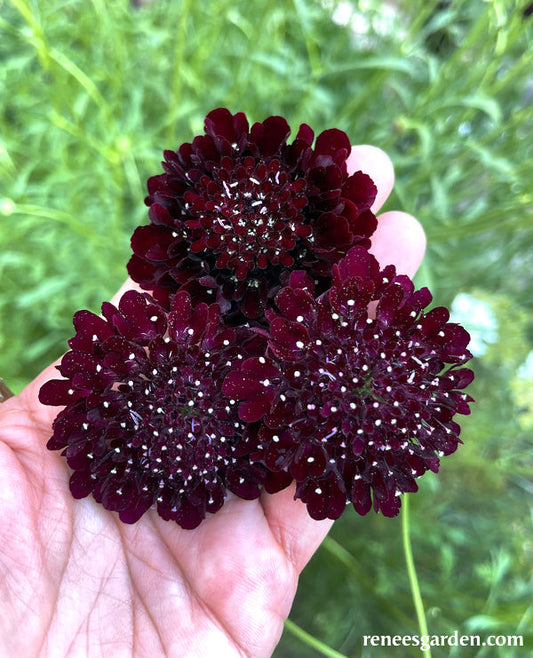
Heirloom Scabiosa Dark Night
HARDY ANNUAL
Spring/summer bloom
Can handle light frostFOR BEST RESULTS
Sow seeds 1 to 2 inches apart in a container of seed starting mix, 2 or 3 weeks before last expected frost. Cover 1/4 inch deep, keep moist and provide a good light source until seedlings are ready to transplant. Plant out strong, sturdy seedlings into fertile garden soil, spacing 12-15 inches apart in full sun.
TO START SEEDS OUTDOORS
Sow seeds in a well-drained, prepared garden bed in full sun as soon as soil can be worked in spring. Space seeds 8 to 10 inches apart in rows a foot apart and cover 1/4 inch deep. Keep seed bed moist until seedlings emerge in 12 to 15 days. Weed carefully and keep well watered. Thin sturdy seedlings to 12-15 inches apart.
GROWING NOTES
Plant in early spring to get sturdy plants that will flower throughout the summer and fall. Curving wiry stems are part of this plant's character; support them for best flowering displays.
Cut often for bouquets and to produce more blossoms. In mild winter areas, they are a short-lived perennial and will overwinter to bloom a second season.
Regular price $4.69Sale price $4.69Unit price perNew -
Heirloom English Thyme
BEST TO PLANT INDOORS
Sow thyme in early spring in a container of seed starting mix. Cover seeds very lightly and keep evenly moist but not soggy until seedlings emerge in 14 to 21 days. Provide a good light source. Transplant when seedlings are about 2 inches tall after gradually acclimating to outdoor conditions.
TO START IN THE GARDEN
Plant thyme after soil has warmed up in spring in a finely textured seed bed with good drainage in full sun. Sow very thinly, cover seed lightly and be careful to keep the seed bed evenly moist and well weeded while seedlings are young.
THIN OR TRANSPLANT
Space clusters of 3 seedlings 8 to 10 inches apart when large enough to handle.
GROWING NOTES
Given a sunny location with good drainage, easy-growing thyme plants are reliable productive and long-lived garden perennials. Little lilac flowers bloom in midsummer; cut back foliage halfway when the blossoms fade to keep plants looking fresh. Cut leafy thyme sprigs as needed once plants are well established.Regular price $4.89Sale price $4.89Unit price per -
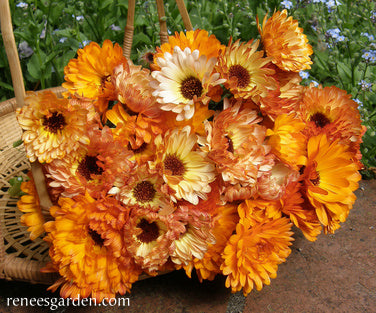
Butterfly Flowers Flashback Calendula
HARDY ANNUAL
Spring/fall bloom
Takes light frostTO START OUTDOORS
Calendulas bloom best in cool weather, so plant in early spring. Sow seeds 1 inch apart in well-drained soil in full sun. Cover 1/2 inch deep, firm soil and keep seed bed moist. Germination takes 1 to 2 weeks. After seedlings are well established, thin or transplant 8 inches apart to allow for good air circulation and discourage mildew. Calendulas can be sown again in midsummer for fall bloom.
TO START EARLY INDOORS
In early spring, sow seeds 1 inch apart in a container of seed starting mix and cover 1/2 inch deep. Keep evenly moist as seedlings emerge and provide a good light source until ready to plant outdoors. Transplant when seedlings are about 2 to 3 inches tall after gradually acclimating plants to outdoor conditions. Thin or transplant seedlings 8 inches apart for best performance.
GROWING NOTES
Plant when weather is cool to get sturdy plants that bloom for many weeks if faded flowers are removed. Grow this quick-flowering, easy annual along with snapdragons, cornflowers and pansies for late spring bloom. In mild climates, sow again in late summer for winter or very early spring flowers.
Regular price $2.99Sale price $2.99Unit price per -
Baby Pumpkins Mini Jack
BEST TO START OUTDOORS
Pumpkins need full sun, rich fertile soil and warm temperatures. Wait to plant until temperatures stay above 50°F (10°C) day and night. Sow groups of 2 to 3 seeds 2 feet apart and 1 inch deep in rows 4 feet apart. Thin to 1 strong seedling per group to give vines room to ramble. Or, make slightly mounded hills 2 to 3 feet across and 6 feet apart and plant 4 to 5 seeds in each hill. When seedlings have several sets of leaves, thin to the strongest 3 seedlings per hill.
GROWING NOTES
Protect young seedlings from marauding birds by covering with plastic berry baskets at sowing time, removing before plants get crowded. To save space, or for a handsome garden centerpiece, Mini Jack vines can easily be trained up fences, trellises or tepees.
HARVEST AND USE
All pumpkins need to mature properly, so wait to pick until rinds are fully colored and tough enough to resist piercing with a fingernail and vines have died back. Then cut, leaving a good stem handle. Let them cure for 10 days in the sun, then store in a cool dry place and they’ll keep for months. In the kitchen, hollow them out, then stuff and bake them for dandy little soup or vegetable tureens.Regular price $2.99Sale price $2.99Unit price per -
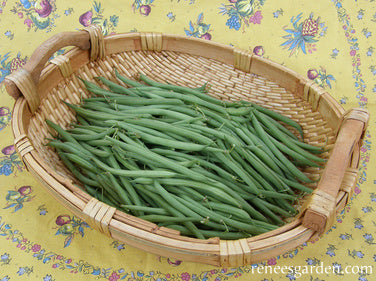
Bush French Filet Beans Rolande
START SEEDS OUTDOORS
In spring, once weather is warm and settled and night temperatures stay above 55°F (13°C), plant seeds in well-worked, fertile soil in full sun. Poke seeds in 1 inch deep and 4 inches apart in rows 1 1/2 to 2 feet apart. Make successive sowings several weeks apart until the end of June to provide long continued harvests.
GROWING NOTES
Tender, crispy garden beans are an easy reliable crop to grow, but don’t plant seeds too early as cold conditions prevent good germination. If first sowing comes up unevenly, replant right away; new seedlings will catch up quickly. Birds are often attracted to young bean seedlings, so watch carefully and protect with netting or floating row covers if necessary. Avoid cultivating plants or picking pods when plants are wet.
HARVEST AND USE
Pick these fine flavored French gourmet beans more often than other bean varieties; at least every other day. They should be full size, but still very slender and no thicker than a pencil. The more you pick, the more plants will produce. Steam or sauté them quickly, just until tender-crisp and serve simply to fully enjoy their tempting flavor.
Regular price $4.39Sale price $4.39Unit price per -
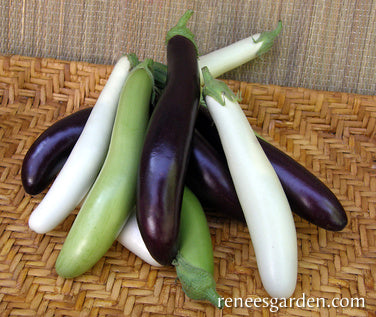
Heirloom Eggplants Asian Mix
BEST TO START INDOORS
In early spring, start indoors about 2 months before outdoor night temperatures are reliably in the 50-55°F (10-13°C) range. Sow seeds 1/4 inch deep and 1 inch apart in a container of seed starting mix. Keep moist and warm 80-85°F (27-30°C) and provide a strong light source until ready to plant outside. When seedlings are 2 inches tall, transplant into deeper individual containers. Maintain at 70-75°F (21-24°C). Feed with half-strength fertilizer every 2 weeks until weather is warm enough to gradually acclimate seedlings to outdoor conditions. Transplant 2 feet apart into rich soil in full sun.
GROWING NOTES
Don’t transplant these heat-lovers outdoors until nights stay securely above 55°F (13°C). Prepare soil well with aged manure or compost. Plant only robust seedlings with well-developed roots and mulch well. Fertilize plants regularly throughout the season.
HARVEST AND USE
Pick when fruits have sized up and are firm fleshed and glossy. Slice 1/2 inch thick, brush with olive oil and broil until tender. Then layer with a rich tomato sauce, fresh herbs and several cheeses to make Eggplant Parmesan. Bake whole in a hot oven, then scoop out flesh and mash with garlic, olive oil, lemon juice and chopped parsley for a savory dip to serve on toasted pita bread.
Regular price $4.89Sale price $4.89Unit price per -
Cactus Zinnias Heirloom Raggedy Anne
ANNUAL
Summer/fall bloom
Frost tenderTO START DIRECTLY IN THE GARDEN
Sow seeds in a well-worked seedbed in full sun when danger of frost is past and weather is warm and settled. Space seeds 2 to 3 inches apart in rows 12 inches apart, cover about 1/2 inch deep and gently firm soil. Keep soil evenly moist while awaiting germination.
TO START EARLY INDOORS
One month before last frost date, sow seeds 1/2 inch deep and 3 inches apart in a container of seed starting mix. Keep moist and provide a strong light source until seedlings are ready to plant out. Gradually acclimate to outdoor conditions before transplanting.
THIN OR TRANSPLANT
Space seedlings 10 to 12 inches apart to give plants room to mature.
GROWING NOTES
Zinnias grow effortlessly in ordinary garden soil in full sun. For large and abundant flowers, thin before seedlings get crowded; adequate spacing and regular even watering will ensure free flowering and discourage mildew. Pick flowers often by cutting long stems well back into the plant to keep them branching from below and producing best blooms for bright summer-long bouquets.Regular price $2.99Sale price $2.99Unit price per -
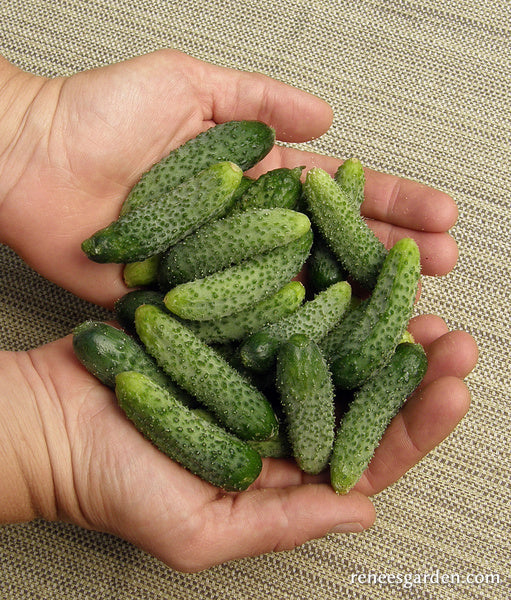
Petite Pickles French Cornichon
START SEEDS OUTDOORS
Plant heat loving cucumbers only when weather is warm and settled and night temperatures stay above 50°F (10°C). Amend soil well with aged manure or compost. Sow groups of 2 to 3 seeds 1 1/2 feet apart and 1 inch deep with 3 feet between rows.
Thin to 1 seedling per group. Or make slightly mounded hills 5 feet apart, sowing 5 or 6 seeds in each hill. Thin to the 3 strongest plants.
GROWING NOTES
Protect seedlings from marauding birds with plastic berry baskets, removing before plants get crowded. Shallow rooted cucumbers need ample and consistent moisture. Avoid overly wet or dry periods for good quality fruit. Growing cucumber vines up vertical supports saves garden space and makes it easy to find and harvest the cucumbers.
HARVEST AND USE
IMPORTANT: Harvest by cutting when just 1 1/2 to 2 inches long. Harvest every few days to keep vines producing and the cornichons from getting too big! Put up pickles within a few days of harvest.
Pickle tiny cornichons in a simple vinegar solution with garlic, peppercorns and fresh tarragon or dill. Traditional with pâté and delicious as snacks or with cocktails.
Regular price $4.69Sale price $4.69Unit price per -
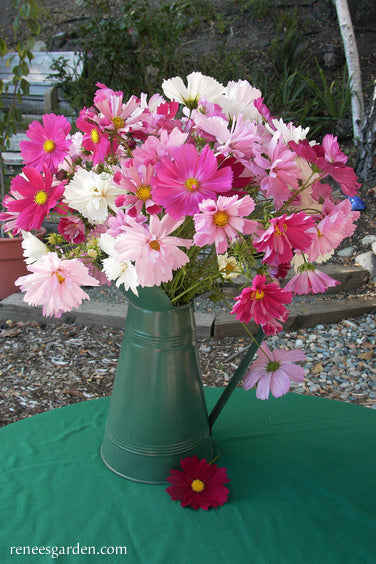
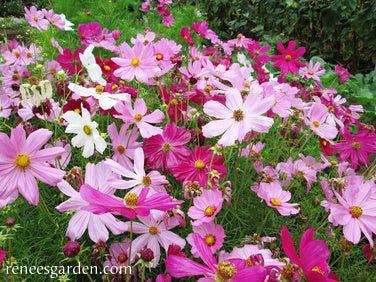
Specialty Cosmos Dancing Petticoats
ANNUAL
Summer/fall bloom
Frost tenderTO PLANT OUTDOORS
Sow seeds 1/2 inch deep, 1 to 2 inches apart in a sunny location in well-worked garden soil once danger of frost is past. Keep seed bed moist. Seedlings emerge in 5 to 10 days. Keep well weeded and watered while plants are young; mature cosmos can handle hot and dry conditions.
TO START EARLY INDOORS
Sow seeds 1 inch apart in a container of seed starting mix, 4 to 6 weeks before last expected frost. Cover 1/2 inch deep, keep moist and provide a good light source. Plant outdoors once weather warms up after gradually acclimating to outdoor conditions. Thin or transplant 8 inches apart when seedlings are large enough to handle.
GROWING NOTES
These free-flowering, long blooming summer flowers fill the garden with vibrant color, producing reliably in all soil types. Sow several times through June for a succession of fresh flowers. Cutting generous bouquets actually prolongs the blooming season. Cosmos pair beautifully with cleome, asters and zinnias.
Regular price $3.39Sale price $3.39Unit price per -
French Baby Bush Beans Nickel Filet
START SEEDS OUTDOORS
In spring, once weather is warm and settled and night temperatures stay above 55°F (13°C), plant seeds in well-worked, fertile soil in full sun. Poke seeds in 1 inch deep and 4 inches apart in rows 1-1 1/2 to 2 feet apart. Make new sowings several weeks apart until the end of June to provide long continued harvests.
GROWING NOTES
Tender crispy garden beans are an easy reliable crop to grow, but don’t plant seeds too early as cold conditions prevent good germination. If first sowing comes up unevenly, replant right away; new seedlings will catch up quickly. Birds are often attracted to young bean seedlings, so watch carefully and protect with netting or floating row covers if necessary. Avoid cultivating plants or picking pods when plants are wet.
HARVEST AND USE
Pick these fine flavored French gourmet beans more often than other bean varieties; at least every other day. They are full size when just 4 inches long and no thicker than a pencil. The more beans you pick, the more plants will produce. Steam or sauté them quickly, just until tender-crisp and serve simply to fully enjoy their tempting flavor.
Regular price $4.39Sale price $4.39Unit price per -
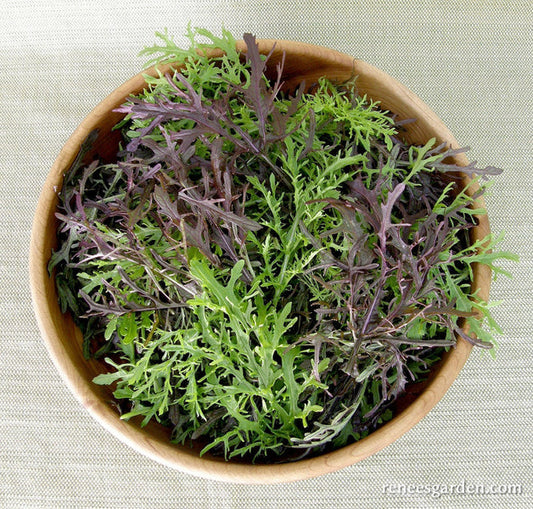
Colorful Salad Mustards Ruby & Emerald Streaks
START SEEDS OUTDOORS
In cool early spring weather, sow seeds in finely-worked soil in full sun. Shake seeds from the palm of your hand, broadcasting them about 1/2 inch apart over the entire seedbed or in wide rows, and cover lightly and evenly with 1/4 inch of fine soil. Firm soil gently and water with a fine spray. Keep seedbed evenly moist. Make small successive sowings until summer weather turns hot for a constant supply. Plant again in late summer for fall harvesting.
GROWING NOTES
These feathery, lacy plants grow easily in cool weather with consistent moisture and will produce a fast leafy harvest. To extend the sowing season into hot weather, sow in light shade or erect a canopy of loosely woven shade cloth over the bed. Birds are often attracted to tender young seedlings, so protect them if necessary.
HARVEST AND USE
To harvest by the “cut and come again” method, wait until plants are 4 to 6 inches tall. Cut as much as you need, using scissors to shear off a patch of leaves about 1 to 2 inches above the soil level. Water well and fertilize lightly and plants will regrow for more cuttings before summer heat comes on. Enjoy Ruby Red and Emerald Green’s beautiful colors and delicious, mildly spicy mustard flavor in spring and fall salads, on cheese plates and add the pretty, savory leaves to sandwiches and Panini.
Regular price $4.89Sale price $4.89Unit price per -
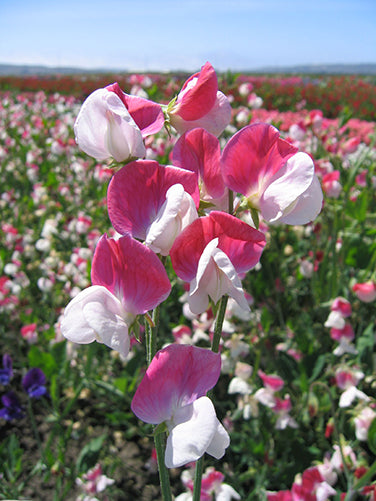
Scented Sweet Peas Heirloom Painted Lady
ANNUAL CLIMBING VINE
Spring/summer bloom
Frost tolerantEASIEST TO START OUTDOORS
Sweet peas must have well drained soil, so dig deeply and enrich with aged manure or compost before sowing seeds. Erect a well-anchored trellis, vertical netting or other support for vines before planting. Sow seeds in full sun in cool early spring weather as early as the ground can be worked. In mild winter areas, where the ground does not freeze, seeds can also be planted in fall to form strong root systems, then overwinter to bloom strongly in spring. Plant sweet pea seeds 1 inch deep and 2 to 3 inches apart. When seedlings are 2 inches tall, thin them 4 to 5 inches apart, to allow plants room to mature.
GROWING NOTES
Sweet peas bloom best before the weather gets too hot, so if spring planting, sow as soon as ground can be worked. Where summer heat comes on fast, they’ll appreciate a spot with afternoon shade. Anchor supports well as vines will grow heavy with bloom. Protect seedlings from birds, slugs and snails. Mulch and keep well watered. For longest bloom, pick flowers often and keep faded blossoms cut.Regular price $3.99Sale price $3.99Unit price per -
Kneehigh Cosmos Sonata Mix
ANNUAL
Summer/fall bloom
Frost tender.TO PLANT OUTDOORS
Sow seeds 1/2 inch deep, 1 to 2 inches apart in a sunny location in well-worked garden soil once danger of frost is past. Keep seed bed evenly moist but not soggy. Seedlings emerge in 5 to 10 days. Keep well weeded and watered while plants are young; mature cosmos can handle hot and dry conditions.
TO START EARLY INDOORS
Sow seeds 1 inch apart in a container of seed starting mix, 4 to 6 weeks before last expected frost. Cover 1/4 inch deep, keep moist and provide a good light source. Plant outdoors once weather warms up after gradually acclimating seedlings to outdoor conditions.
THIN OR TRANSPLANT
Space 6 inches apart when seedlings are large enough to handle.
GROWING NOTES
Carefree cosmos are among the easiest and most reliable of all summer flowers. Plant well-bred kneehigh Sonata for quick bloom and manageable size. The bright silky flowers and ferny foliage combine beautifully with blue salvia, dwarf sunflowers and zinnias. Cutting Sonata’s vibrant flowers for bouquets actually prolongs the blooming season.
Regular price $3.39Sale price $3.39Unit price per