Attracts Butterflies
Enjoy Enchanting "Flowers of the Air"
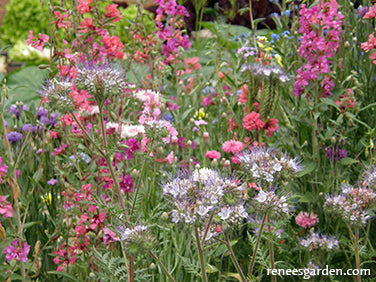
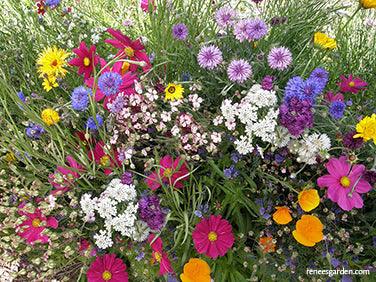
These blossom shapes and colors will bring butterflies to the garden all summer long to feed, rest and roost.
-
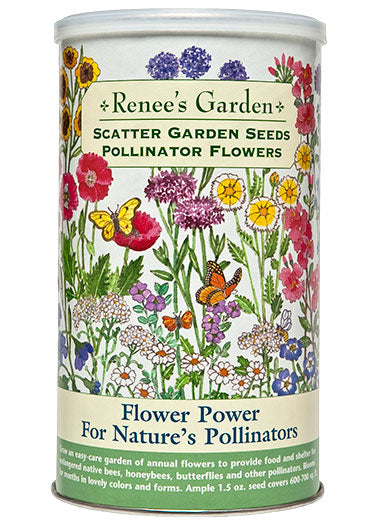
Flower Power For Nature's Pollinators
NOTE
The seed mix is packed with a larger quantity of organic rice hulls to help space the tiny seeds. Before opening, shake canister thoroughly to mix them together.
HOW TO PLANT
As soon as ground can be worked in early spring, sow mix in ordinary garden soil in full sun. In mild climates, where the ground does not freeze hard in winter, seeds can also be planted in late fall to overwinter and bloom the next spring.
Prepare the planting area by removing all weeds, grass and large stones. Break up soil clumps and evenly loosen the top 2 inches of soil with a digging fork or shovel, then smooth out with a flat rake.
Shake the can thoroughly, then scatter the contents thinly and evenly over the prepared ground. Using your rake, lightly cover the seed mixture, about 1/4 inch deep, and then lightly firm the soil. Water thoroughly and evenly with a gentle mist. Keep soil bed evenly moist while awaiting germination and when the seedlings are small. Water regularly for best blossoms.
GROWING NOTES
Plants will flower in succession and bloom much longer if watered regularly. At season’s end, allow spent flowers to form pods and then drop their seeds to bloom again next spring.
ANNUAL POLLINATOR FLOWER MIX
INDIVIDUAL VARIETY NAMESMIX% Chinese Forget-Me-Not19.6Baby Blue Eyes19.6 Single Chinese Aster9.8 Cornflower, ‘Polka Dot Mix’9.8Shirley Poppy
7.8 Sweet Mignonette
7 Tidy Tips
4.9 Virginia Stock10 Creeping Daisy3 Clarkia3 Globe Gilia2.9 Lemon Mint2 California Bluebell2 Lacy Phacelia1.5 Tall White Alyssum1 Plains Coreopsis1 Inert Material: Organic rice hulls Regular price $16.95Sale price $16.95Unit price per -
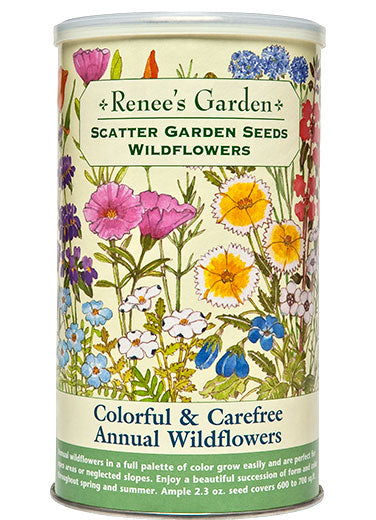
Colorful & Carefree Annual Wildflowers
NOTE
Seeds are packed with a larger quantity of milled rice hulls to help space the tiny seeds when scattering. Before opening, shake the can thoroughly to mix them together so when you cast the seeds they are spaced with room for the plants to grow.
HOW TO PLANT
As soon as the ground can be worked in early spring, plant the seeds in ordinary garden soil in full sun. In mild climates, where the ground does not freeze hard in winter, seeds can also be planted in late fall to overwinter and bloom the next spring.
To prepare the planting area: remove all weeds, grass and large stones. Break up soil clumps and evenly loosen the top 2 inches of soil with a digging fork or shovel, then smooth out with a flat rake.
Shake the can thoroughly before opening, then scatter the contents thinly and evenly over the prepared ground. Using your rake, cover the seed mixture 1/4 inch deep and lightly firm the soil. Water with a gentle mist thoroughly and evenly. Keep the soil moist while awaiting germination and while the seedlings are small.
GROWING NOTES
When wildflower plants are mature they can handle somewhat dry conditions, but will thrive and bloom much longer if watered regularly. For indoor bouquets, cut the flowers as blossoms open. At season’s end, let spent flowers form pods and drop seeds to bloom again the next spring.
WILDFLOWER MIX
INDIVIDUAL VARIETY NAMES MIX% Candytuft
Iberis umbellata18 Baby Blue Eyes
Nemophila menziesii
16 Five Spot
Nemophila maculata
16 Chinese Houses
Collinsia heterophylla12 African Daisy
Dimorphotheca aurantiaca8 CA Poppy
Eschscholzia californica7 CA Bluebell
Phacelia campanularia5 Shirley Poppy
Papaver rhoeas5 Bird’s Eyes
Gilia tricolor4 Dwarf Godetia
Clarkia amoena2 Clarkia
Clarkia unguiculata2 Globe Gilia
Gilia capitata2 Tidy Tips
Layia platyglossa2 Inert Material: Clean milled rice hulls NOTE
The seed mix is packed with a larger quantity of organic rice hulls to help space the tiny seeds. Before opening, shake canister thoroughly to mix them together.
Regular price $16.95Sale price $16.95Unit price per -
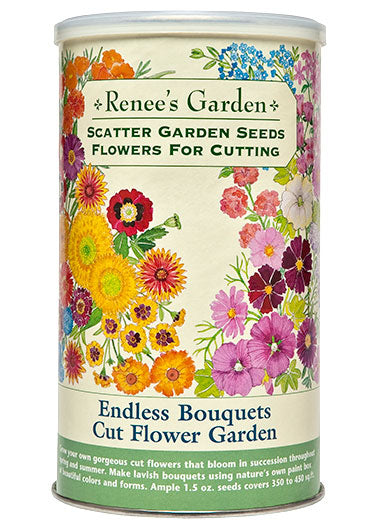
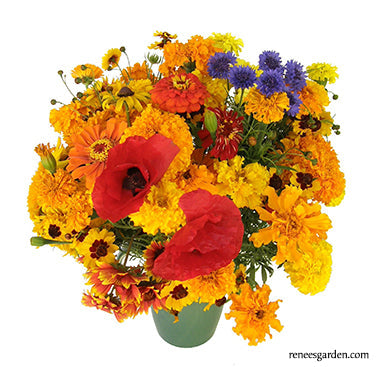
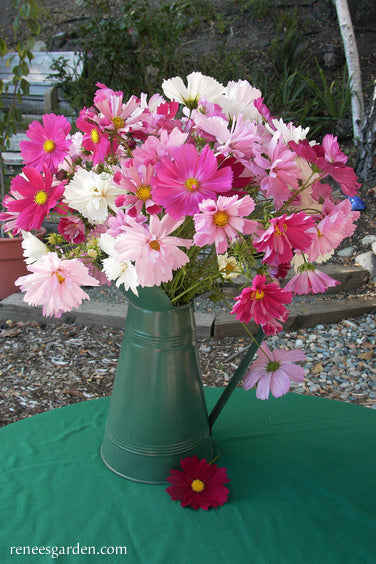
Endless Bouquets Cut Flower Garden
NOTE
The seed mix is packed with a larger quantity of organic rice hulls to help space the tiny seeds. Before opening, shake canister thoroughly to mix them together.
HOW TO PLANT
As soon as ground can be worked in early spring, sow mix in ordinary garden soil in full sun. In mild climates, where the ground does not freeze hard in winter, seeds can also be planted in late fall to over-winter and bloom the next spring.
Prepare the planting area by removing all weeds, grass and large stones. Break up soil clumps and evenly loosen the top 2 inches of soil with a digging fork or shovel, then smooth out with a flat rake.
Shake can thoroughly, then scatter the contents thinly and evenly over prepared ground. Using your rake, lightly cover the seed mixture, about ¼ inch deep, and then lightly firm the soil. Water evenly with a gentle mist. Keep bed moist while awaiting germination and when the seedlings are small.
GROWING NOTES
Harvesting opening flowers regularly for bouquets will help to encourage repeat bloom. Plants will flower in succession and bloom much longer if watered regularly. At season’s end, allow spent flowers to form pods and then drop their seeds to bloom again next spring.
ANNUAL CUTTING FLOWER MIX
NAME MIX% TYPE HEIGHT COLOR Aster
(Callistephus chinensis)2 A 12 - 36" Blue/Pink/White/Purple Calendula
(Calendula officinalis)10 A 12 - 24" Yellow/Orange/Cream Bachelor Buttons
(Centaurea cyanus)8 A 12 - 36"
Blue/RoseWhite Godetia
(Clarkia amoena)2 A 10 - 18" Pink/White Clarkia
(Clarkia elegans)3 A 10 - 18" Pink/Lavender Plains Coreopsis
(Coreopsis tinctoria)3 A 12 - 36" Yellow-Maroon Cosmos
(Cosmos bipinnatus)7 A 36 - 60" White/Pink/Crimson/Rose Chinese Forget-Me-Not
(Cynoglossum amabile)10 A/B 18 - 24" Blue Larkspur
(Delphinium ajacis)3 A 12 - 36" White/Pink/Blue/Violet African Daisy
(Dimorphotheca aurantiaca)5 A 10 - 16" Orange/Salmon/White Poppy
(Eschscholzia californica)2 TP 12 - 18" Yellow/Orange Annual Gaillardia
(Gaillardia pulchella)2 A 12 - 24" Yellow-Red Baby's Breath
(Gypsophila elegans)8 A 8 - 18" White Sunflower
(Helianthus annus)
2 A 24 - 72" Yellow Strawflower
(Helichrysum monstrosum)
1 A 24 - 36" Yellow/White/Red/Pink Candytuft
(Iberis umbellata)
5 A 12 - 18" White/Pink/Violet Lavatera (Tree Mallow)
(Lavatera trimestris)2 A 24 - 48" White/Pink Alyssum Tall (Sweet Alyssum)
(Lobularia maritima)
5 TP 8 - 16" White Evening Primrose
(Oenothera lamarckiana)
1 B/P 24 - 60" Yellow Shirley Poppy
(Papaver rhoeas)
3 A 12 - 30" White/Pink/Red California Bluebells
(Phacelia campanularia)
1 A 8 - 20" Blue Black Eyed Susan
(Rudbeckia hirta)
5 A/B/P 12 - 36" Yellow Catchfly
(Silene armeria)
2 A/B 16 - 22" Pink Marigold
(Tagetes erecta)
3 A 12 - 16" Yellow/Orange/Maroon Zinnias
(Zinnia elegans)
5 A 12 - 36" White/Purple/Yellow/Orange/Red
Inert Material: Organic rice hulls
A = Annual B = Biennial TP = Tender PerennialRegular price $16.95Sale price $16.95Unit price per -
Specialty Cosmos Dancing Petticoats
ANNUAL
Summer/fall bloom
Frost tenderTO PLANT OUTDOORS
Sow seeds 1/2 inch deep, 1 to 2 inches apart in a sunny location in well-worked garden soil once danger of frost is past. Keep seed bed moist. Seedlings emerge in 5 to 10 days. Keep well weeded and watered while plants are young; mature cosmos can handle hot and dry conditions.
TO START EARLY INDOORS
Sow seeds 1 inch apart in a container of seed starting mix, 4 to 6 weeks before last expected frost. Cover 1/2 inch deep, keep moist and provide a good light source. Plant outdoors once weather warms up after gradually acclimating to outdoor conditions. Thin or transplant 8 inches apart when seedlings are large enough to handle.
GROWING NOTES
These free-flowering, long blooming summer flowers fill the garden with vibrant color, producing reliably in all soil types. Sow several times through June for a succession of fresh flowers. Cutting generous bouquets actually prolongs the blooming season. Cosmos pair beautifully with cleome, asters and zinnias.
Regular price $3.39Sale price $3.39Unit price per -
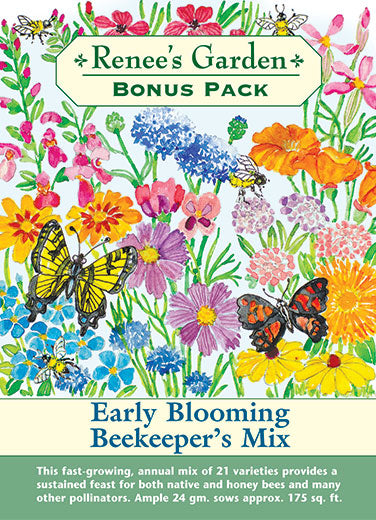
Bonus Pack Early Blooming Beekeeper's Mix
ANNUAL
Spring/summer bloom
Frost tenderBEST TO START DIRECTLY OUTDOORS
In early spring, after all danger of frost is past, plant in a well-prepared garden bed in full sun. Shake packet to mix. Scatter the seed thinly and evenly over finely worked soil, aiming to have the seeds about an inch or so apart. Cover lightly, about 1/4 inch deep, and gently firm the soil over the seeds – a rake is handy for this step.
Water thoroughly and evenly with a very gentle spray. Keep the seed bed moist while awaiting germination and while flowers are actively growing for the most blossoms. The many flower varieties in this pretty mix will grow and bloom in succession throughout late spring and summer.
Regular price $9.99Sale price $9.99Unit price per -
Edible Sunflowers Snack Seed
EASIEST TO START DIRECTLY IN THE GARDEN
Plant in full sun when weather is above 50°F (10°C) both day and night and all danger of frost is past. Poke seeds into well worked, fertile soil 1 inch deep and 4 inches apart. Press soil over seeds and keep moist as seedlings emerge. When seedlings are 3 inches tall, thin them 12 to 18 inches apart with 3 feet between rows so plants have room to mature.
TO START EARLY INDOORS
Several weeks before last frost date, sow seeds 1 inch deep in individual pots of well-drained seed starting mix. Keep moist and provide a strong light source until seedlings are ready to plant outside. Transplant seedlings carefully 12 to 18 inches apart with 3 feet between rows.
GROWING & HARVEST
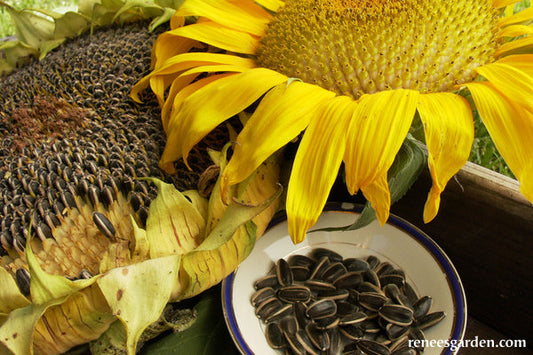
Cover seeds at planting time with netting or green plastic berry baskets to keep birds from plucking seeds and seedlings from the ground (remove before plants get crowded). Towards midsummer, after sunflowers grow tall and bloom, the flower heads’ outer petals will shrivel and seeds begin to form. Wait until center florets have dried up, indicating pollination is complete, before covering the ripening heads with paper grocery bags to keep birds from picking out the immature seeds. When seeds are dry, plump and fully formed, harvest heads and rub seeds out with thumbs. Store in a cool, dry place in a sealed container to keep out insects.Regular price $4.69Sale price $4.69Unit price per -
Flowering Herbs Bodegold Chamomile
ANNUAL
Spring/summer/fall harvest
Frost hardyTO START DIRECTLY IN THE GARDEN
Sow seeds as thinly as possible in a well-drained, finely textured garden bed in full sun and cover lightly. Keep evenly moist while awaiting germination. Thin seedlings to 4 inches apart before they become crowded.
TO START INDOORS
Sow seeds in early spring in a container of seed starting mix. Cover seeds very lightly and keep evenly moist until seedlings emerge. Provide a good light source until seedlings are about 2 inches tall. Transplant 4 inches apart after gradually acclimating to outdoor conditions. Don’t let seedlings get too big or crowded before planting out.
GROWING NOTES
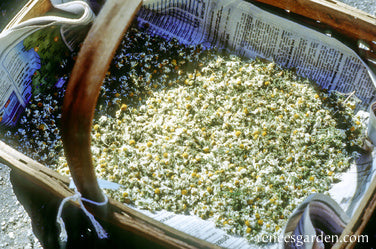
Start chamomile in early spring for sturdy growth before warm weather initiates flowering. Harvest every few days just as the petite daisylike flowers are fully open, but before the petals dry up. Air dry blossoms indoors in a single layer for several days, then store in a sealed container. Steep in boiling water for a lovely scented tea. Leave a few flowers in the garden to set seed, then shake spent plants and they will often self-sow to bloom next season. blossoms with their dainty white petals and gold centers and simply air dry for making fragrant pineapple-scented tea. Serve with a little honey to settle the stomach and soothe the nervous system before retiring.Regular price $2.99Sale price $2.99Unit price per -
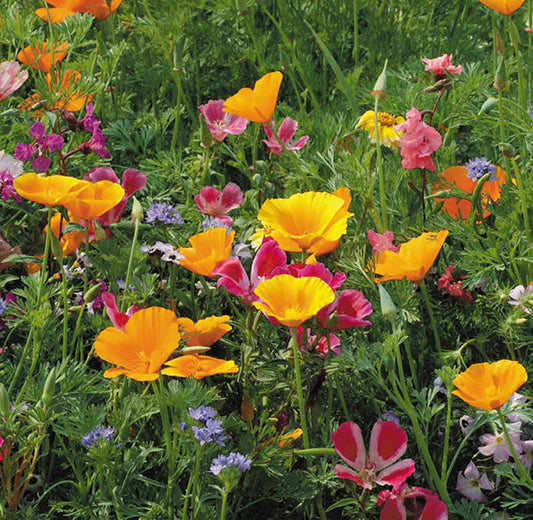
California Native Orange Poppies
NOTE
The Poppy seeds in this can are packed with a larger quantity of milled rice hulls to help space the tiny seeds when scattering.
Before opening, shake the can thoroughly to mix them together so when you cast the seeds they are spaced with room for the plants to grow.
HOW TO PLANT
In mild winter climates, where the ground does not freeze hard, poppies can be sown in late fall to overwinter for spring bloom. Or, plant as early as possible in spring, as poppies can handle light frosts and bloom longest when given a good start in cool weather.
To prepare the planting area: remove all weeds, grass and large stones. Break up soil clumps and evenly loosen the top 2 inches of soil with a digging fork or shovel, then smooth out with a flat rake.
Shake the can thoroughly before opening, then scatter the contents thinly and evenly over the prepared ground. Using your rake, cover the seed mixture 1/4 inch deep and lightly firm the soil. Water with a gentle mist thoroughly and evenly. Keep the soil moist while awaiting germination and while the seedlings are small.
GROWING NOTES
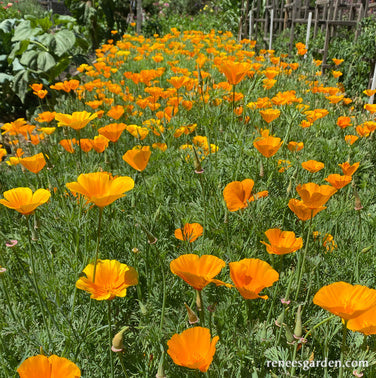
Mature poppy plants can handle dry conditions, but will thrive and bloom much longer if watered regularly. Poppies make lovely cut flowers if brought indoors just as the buds begin to open. At season’s end, let spent flowers form pods and drop seeds to bloom again the next spring.
Regular price $16.95Sale price $16.95Unit price per -
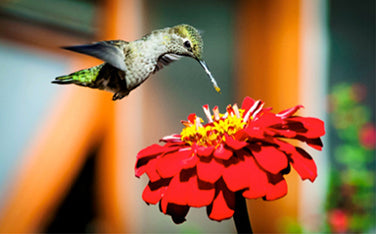
Bonus Pack Seeds for a Hummingbird Garden
TWO DESIGN IDEAS
Plant your hummingbird flower garden in a rectangular bed or border with tall, medium and low flowers from back to front, OR plant in a circle garden with the tall climber in the center, surrounded by the middle and then lower growing flowers.
At the back of the border OR climbing up a central trellis in a circle garden, climbing Scarlet Runner Beans offer abundant coral-red blossoms that hummers love to sip.
At mid-level, Scarlet Flame Zinnias bright red flowers make a splash of color easy for hummers to see from a distance.
At front of the border OR on the outside of the circle, low mounding Summer Charm Nasturtiums are a sure fit for hummingbirds' nectar-seeking bills.CREATING HUMMINGBIRD HABITAT
Plant as big an area as possible to create explosive bursts of color that can be seen easily from the air. Hummingbirds expend an extraordinary amount of energy for their size, and require an enormous amount of food – you just can't have too many flowers! After locating convenient nectar sources, these intelligent little creatures follow a foraging routine in a relatively small area despite their ability to roam and will return for ongoing meals from your garden.
These flowers offer complete natural meals: while nectar is their primary food source, blossoms also harbor small insects that are protein sources for the diminutive birds, so hummingbirds will help in your garden by dining on aphids and other tiny insects they snap up in their sharp pointed bills while simultaneously pollinating them.
Design elements such as a handsome trellis for your climbing runner bean blossoms provide a convenient, stationary perch where these territorial little birds can survey their entire domain. Enjoy watching them as they dine, hover, socialize, argue and perch, wings vibrating with amazing speed and grace, flying furiously up and down, backward, forward, even upside down amongst your colorful flowers.
Regular price $8.99Sale price $8.99Unit price per -
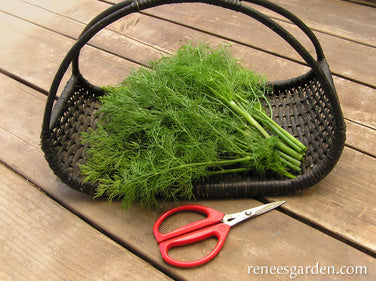
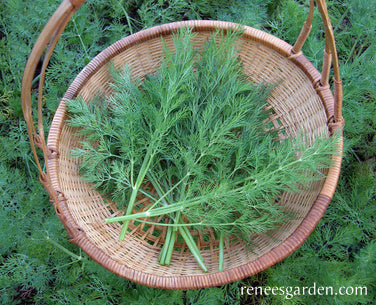
Kitchen Herbs Dukat Leafy Dill
ANNUAL
Spring/summer/fall harvest
Can handle light frostsEASIEST TO PLANT OUTDOORS
In early spring, sow dill seed directly into well-drained garden soil 1 to 2 inches apart in rows 6 inches apart in full sun and cover seeds 1/4 inch deep. Make small sowings every few weeks to have successive harvests of fresh leaves. Keep seed bed evenly moist while awaiting germination in 7 to 14 days.
TO START INDOORS
Sow dill seed thinly in individual pots of seed starting mix. Cover 1/4 inch deep and keep moist as seedlings emerge in 7 to 14 days. Provide a good light source. Transplant when seedlings are about 2 inches tall after gradually acclimating to outdoor conditions. Don’t let seedlings get crowded before planting outside.
THIN OR TRANSPLANT
Space groups of 2 or 3 seedlings about 4 inches apart when seedlings are large enough to handle.
GROWING NOTES
Keep plants well watered and thinned; crowded seedlings won’t make the lush growth desired for fresh leaf harvests and will form seed heads too early. Make several successive sowings for plenty of leafy dill fronds followed by seed heads to use for pickles and other savory dishes.Regular price $2.99Sale price $2.99Unit price per -
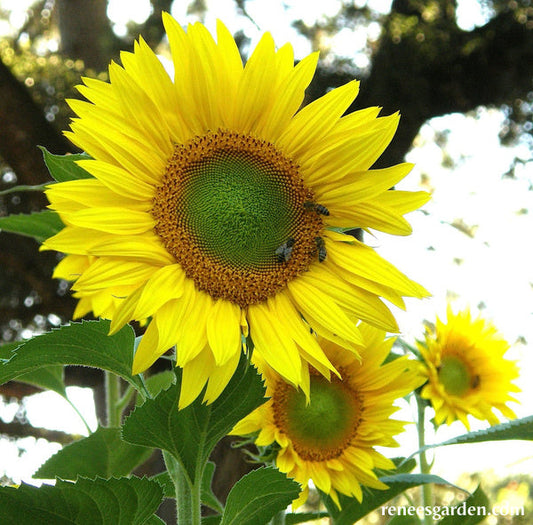
Songbird/Pollinator Flowers The Birds & Bees Sunflowers
ANNUAL
Spring/summer/fall bloom
Frost tenderEASY TO START OUTDOORS
Plant in full sun in good garden soil when all danger of frost is past and temperatures have reached at least 50°F (10°C) both day and night. Poke seeds into well-worked soil 1 inch deep and 6 inches apart. Press soil firmly over seeds and keep moist as seedlings emerge.
Thin or Transplant: When seedlings are about 3 inches tall, thin them to 12 inches apart with 2 feet between rows, to give growing plants room to establish strong roots and sturdy stalks that won’t blow over.
GROWING NOTES
Keep soil moist and well weeded and protect seedlings from birds at planting time with netting or plastic berry baskets, removing before plants get crowded. For large heads, space seedlings properly 12 inches apart so plants can grow to full size.
HARVEST AND USE
As flowers bloom, bees pollinate the florets in each head and the seeds begin to mature. When the center disk florets have dried up, birds of all sorts will visit to snack on the ripening seed heads.
To harvest for feeding birds in fall and winter: cover heads with paper bags till ripened kernels are plump and hard-shelled, then cut entire heads, let them fully dry. Remove the seeds by hand into a basket, then blow off loose chaff. Store in closed containers to feed as needed.
Regular price $3.39Sale price $3.39Unit price per -
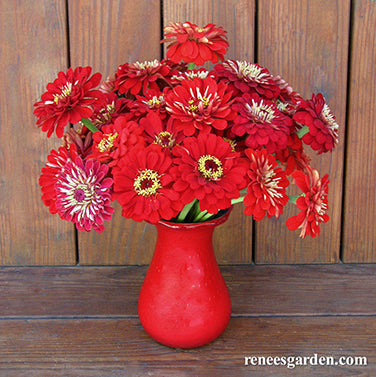
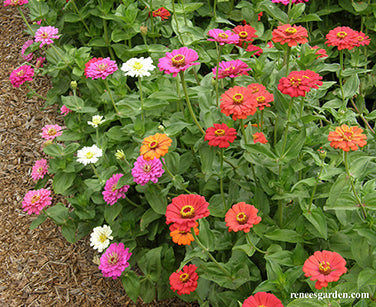
Heirloom Cutting Zinnias Moulin Rouge
ANNUAL
Summer/fall bloom
Frost tenderEASY TO START DIRECTLY IN THE GARDEN
Sow seeds in well-worked soil in full sun when danger of frost is past and weather is warm and above 50°F (10°C) both day and night. Space seeds 2 to 3 inches apart in rows 12 inches apart, cover about 1/2 inch deep and gently firm soil. Keep soil evenly moist while awaiting germination.
TO START EARLY INDOORS
Four weeks before last frost date, sow seeds 1/2 inch deep and 3 inches apart in a container of seed starting mix. Keep warm and moist and provide a strong light source until seedlings are ready to plant outside when temperatures rise above 50°F (10°C) day and night.
THIN OR TRANSPLANT
Space seedlings 8 to12 inches apart when large enough to handle so plants have good air circulation and enough elbow room to grow and bloom freely.
GROWING NOTES
Zinnias grow readily in ordinary garden soil in full sun. For large and abundant flowers, thin before seedlings get crowded; adequate spacing and regular, even watering help keep zinnias productive and discourages mildew. Pick when flower blossoms first open and petals are tight for longest vase life. Cut long stems well back into the plant to keep plants branching low and producing best blooms for summer long bouquets.Regular price $3.39Sale price $3.39Unit price per -
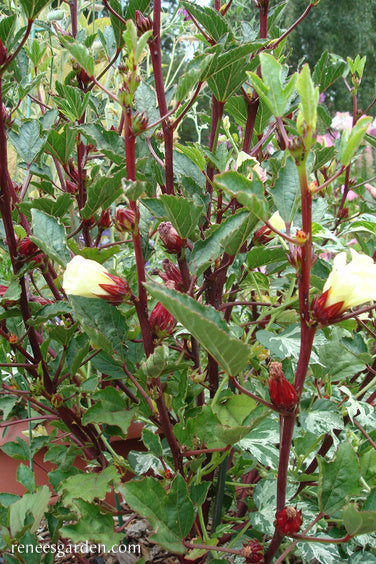
Herbal Tea Zinger Hibiscus
ANNUAL
Summer/Fall Harvest
Heat Loving/Frost TenderBEST TO START INDOORS
In early spring, start seeds indoors 6 to 8 weeks before outdoor temperatures are reliably in the 50°F (10°C) range. Sow seeds 1/2 inch deep and 1 inch apart in seed starting mix. Keep very warm 75 to 80°F (24 to 27°C) and moist but not soggy. Provide a strong light source. When 2 inches tall, transplant seedlings into individual 4 inch pots. Feed with half-strength liquid fertilizer every 2 weeks until weather is warm and nights stay above 55°F (13°C). Gradually acclimate seedlings to the outdoors.
GROWING NOTES
Hibiscus thrive in a sunny, very warm spot in rich and well-drained soil, so add compost or aged manure to the planting bed. Transplant seedlings 8 to 12 inches apart. Pinch tops when 10 inches tall to encourage a bushy, branching form.
For Containers: choose pots 18 inches in diameter and 16 to 18 inches tall.
HARVEST AND USE
After flowers have finished blooming, harvest the deep-red, teardrop-shaped, calyxes at the base of each blossom. Snap off calyxes that are ready, removing spent flower if still attached Use fresh, or air-dry for longer storage.
To Dry: spread in a single layer on paper towels or cotton cloth for 7 to 10 days in a cool, dry place indoors out of heat and humidity. Store in an airtight container. For delicious tea, crush and steep several tablespoons to each cup of boiling water. Honey or sugar and lemon are nice additions. Makes a beautiful iced tea. For a cocktail, combine with sugar, lemon, a little ginger syrup and good rum.
Regular price $3.99Sale price $3.99Unit price per -
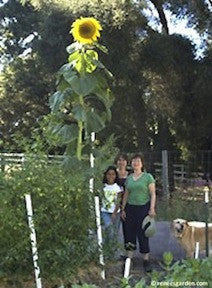
Giant Sunflowers Sunzilla
ANNUAL
Summer/fall bloom
Frost tenderEASIEST TO START DIRECTLY IN THE GARDEN
Plant in full sun in good garden soil when weather is warm and settled both day and night and all danger of frost is past. Poke seeds into well-worked soil about 1 inch deep, 6 inches apart. Press soil firmly over seeds and keep moist as seedlings emerge.
TO START EARLY INDOORS
Several weeks before last frost date, sow seeds 1 inch deep in individual pots of well drained seed starting mix. Keep moist and provide a strong light source until seedlings are ready to plant outside. Transplant carefully, disturbing the roots as little as possible.
THIN OR TRANSPLANT
When seedlings are about 3 inches tall, space them 12 – 18 inches apart with 3 feet between rows so these tall plants will have ample room to grow.
GROWING NOTES
Keep soil moist and well weeded and protect seedlings from birds at planting time with netting or plastic berry baskets, removing before plants get crowded. For large flower heads, space properly so the big plants have room to grow to full size.Regular price $4.39Sale price $4.39Unit price per -
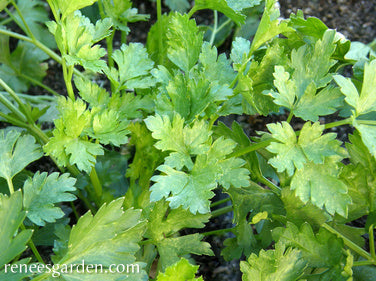
Heirloom Parsley Italian Large Leaf
EASIEST TO START OUTDOORS
Start parsley in spring when weather is settled but still cool and/or in late summer in mild winter climates. Plant in full sun or half-day sun if climate is very hot. Sow seeds 1- 2 inches apart into a well-worked fertile seed bed. Cover 1/4 inch deep. Parsley germinates unevenly over several weeks; be patient and keep seed bed evenly moist. Using synthetic row covers to hold moisture during germination is helpful; remove when seedlings are well established.
TO PLANT INDOORS
In early spring, sow seeds 1 inch apart and 1/4 inch deep in a container of seed starting mix. Keep container moist but not soggy until seedlings emerge. Provide a good light source. Feed seedlings frequently until ready to transplant when several inches tall.
THIN OR TRANSPLANT
Space 3 to 4 inches apart when seedlings large enough to handle.
GROWING NOTES
Parsley needs rich moist soil and ample spacing for lush harvests. Thin early and keep well weeded and watered. Begin to harvest sparingly once plants have 8 to 10 leaves. Fertilize frequently with a high nitrogen source.Regular price $4.89Sale price $4.89Unit price per -
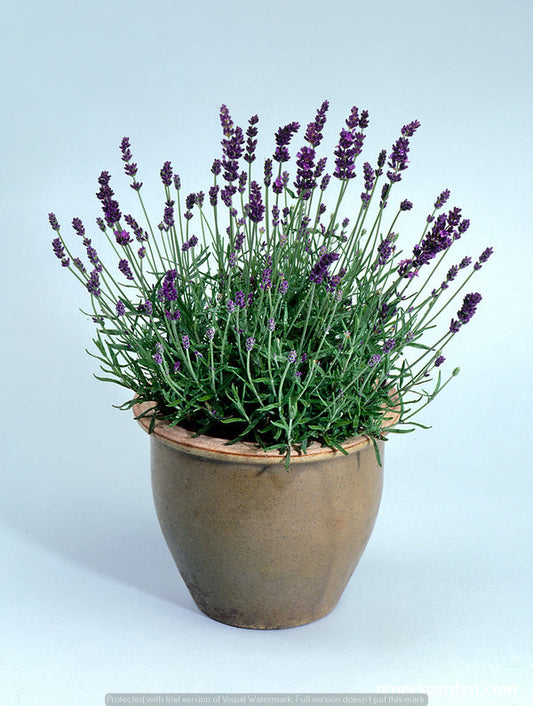
Container Herbs French Perfume Lavender
PERENNIAL
Late spring/early summer bloom
Frost hardy to zone 5 (zone 4 with protection)BEST TO START INDOORS
In early spring, sow seeds about 1 inch apart in a container of seed starting mix, cover very lightly and keep at 60-70°F (16-21°C) in a spot with good air circulation. Keep evenly moist but not soggy. Seedlings emerge slowly and unevenly over 18 to 28 days. Provide a good light source. When seedlings have several sets of leaves, transplant into 4 inch plastic pots. Provide consistent water, but let soil dry out on top between waterings. Feed every few weeks. Plant outside when plants are 2 to 3 inches tall after gradually acclimating to outdoors.
GROWING NOTES
Start these small seeds indoors so you can tend them carefully. When well established, plant seedlings out into pots filled with new potting mix with excellent drainage or in a well drained, sunny garden spot with good air circulation. Plant one seedling per individual pot at least 8 inches wide and deep or space multiple plants 8 inches apart in larger, deeper containers. Feed monthly during the growing season. Plants bloom the first season, but come into fullest flower by the second summer. Harvest stems of scented florets just as they start to open and air dry to use as aromatic sachets. At season's end, shape plants by cutting off spent flower stalks down to top crown of leaves.Regular price $4.99Sale price $4.99Unit price per -
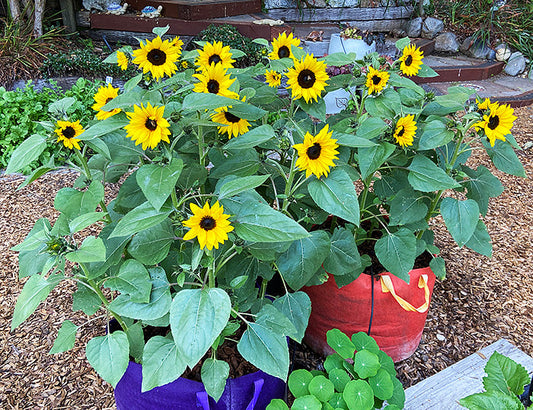
Container Sunflowers Junior
ANNUAL
Summer/fall bloom
Frost tenderPLANT DIRECTLY IN THE GARDEN OR CONTAINER
Plant in full sun in good garden soil when all danger of frost is past and weather is above 50°F (10°C) both day and night. Sow seeds into well-worked soil ½ inch deep and 4 to 5 inches apart. Press soil firmly over seeds and keep moist. When seedlings are 2 to 3 inches thin to 8 inches apart.
For container planting, sow directly into pots filled with well moistened, good quality potting mix. Thin seedlings to no more than 1 plant per 8 inch pot, or 3 plants per 12 inch in diameter and 12 to 18 inch deep pot. For larger planters, space plants 6 inches apart. Extra seedlings can be potted up for more containers, gifts or plant into the garden.
TO START EARLY INDOORS
Several weeks before last frost date, sow seeds 1/2 inch deep in individual 3 to 4 inch pots of well-drained soil mix. Keep moist, feed every 10 days and provide a strong light source until ready to plant outside, when nights are regularly above 50°F (10°C).
GROWING NOTES
Make several sowings, three weeks apart, to have a succession of bright summer flowers. Protect young seedlings from marauding birds with netting or plastic berry baskets, removing before plants get crowded. When 3 inches tall, carefully thin seedlings to proper spacing so they have room to grow and mature.Regular price $4.39Sale price $4.39Unit price per -
Heirloom Butterfly Zinnia Mix State Fair Gold Medal
ANNUAL
Summer/Fall bloom
Frost tenderTO START DIRECTLY IN THE GARDEN
Sow seeds in well-worked soil in full sun after frost danger is over and temperatures are above 50°F (10°C) both day and night. Space seeds 2 to 3 inches apart in rows 12 inches apart, cover 1/2 inch deep and gently firm soil. Keep soil evenly moist while awaiting germination.
TO START EARLY INDOORS
Four weeks before last frost date, sow seeds 1/2 inch deep and 3 inches apart in seed starting mix. Keep warm and moist. Provide a strong light source. Wait until temperatures are above 50°F (10°C) day and night before planting in full sun.
THIN OR TRANSPLANT
When 2-3 inches tall, thin or transplant 12 inches apart, giving these large framed plants good air circulation and room to mature.
GROWING NOTES
Zinnias are easy to grow, but for abundant, healthy flowers, thin before seedlings get crowded; adequate spacing and consistent watering keeps zinnias stress-free and productive and discourages mildew. For long-lived bouquets, cut flowers in the morning when blossoms first open and petals are tight. Cut long stems well back into the plant to keep plants branching low and producing abundant blooms to attract butterflies/pollinators.
Regular price $2.99Sale price $2.99Unit price per -
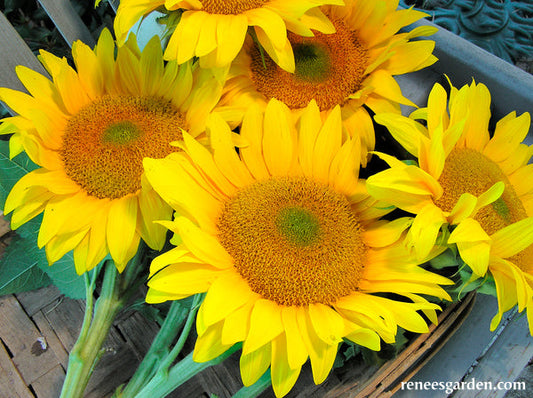
Ornamental Sunflowers Van Gogh
ANNUAL
Summer/fall bloom
Frost tenderEASIEST TO PLANT OUTDOORS
Plant in full sun in good garden soil when weather is warm and settled, all danger of frost is past and both days and nights are evenly in the 50°F (10°C) range. Poke seeds into well-worked soil about 1/2 inch deep, 4 to 5 inches apart. Press soil firmly over seeds and keep moist until seedlings emerge in 8 to 10 days. When seedlings are large enough to handle, thin seedlings to final spacing of 1 foot apart so these tall plants will have ample room to grow. Extra thinned seedlings can be transplanted easily.
TO START EARLY INDOORS
Several weeks before last frost date, sow seeds 1/2 inch deep in individual pots of well-drained seed starting mix. Keep moist and provide a strong light source until seedlings are well established and ready to plant outside. Transplant carefully, disturbing the roots as little as possible. Space seedlings 1 foot apart so plants will have room to mature.
GROWING NOTES
These handsome tall flowers are easy and rewarding to grow. Make several sowings several weeks apart to have a succession of flowers in full bloom. Keep soil moist and well-weeded and protect very young seedlings from birds with netting or plastic berry baskets, removing before plants get crowded.Regular price $4.69Sale price $4.69Unit price per -
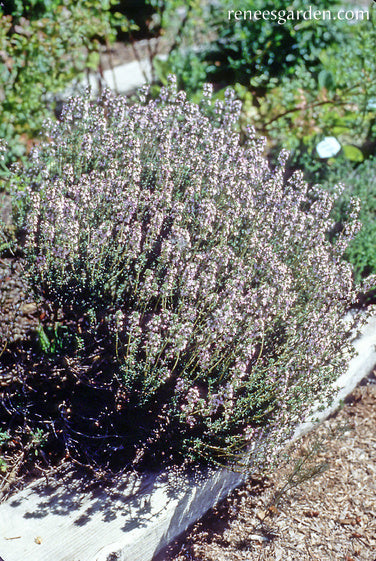
Kitchen Herbs French Thyme
PERENNIAL
Spring/summer/fall harvest
Frost hardyBEST TO PLANT INDOORS
Sow thyme in early spring in a container of seed starting mix. Cover seeds very lightly and keep evenly moist but not soggy until seedlings emerge in 14 to 21 days. Provide a good light source. When seedlings are 2 inches tall, gradually acclimate to outdoor conditions and transplant clusters of 3-4 seedlings 8-10 inches apart.
TO START IN THE GARDEN
Plant thyme after soil has warmed up in spring in a finely textured seed bed with good drainage in full sun. Sow very thinly, cover seed lightly and be careful to keep the seed bed evenly moist and well weeded. When seedlings are several inches tall, thin out, leaving clumps of 3-4 seedlings 8-10 inches apart so plants have room to grown and spread.
GROWING NOTES
Given a sunny location with good drainage, easy-growing thyme plants are reliable productive and long-lived garden perennials. Little lilac flowers bloom in midsummer; cut back foliage halfway when the blossoms fade to keep plants looking fresh. Cut leafy thyme sprigs as needed once plants are well established.Regular price $2.99Sale price $2.99Unit price per -
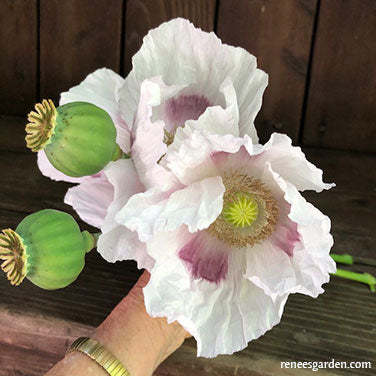
Heirloom Poppies Hungarian Breadseed Poppy
ANNUAL
Spring/summer bloom
Fall harvest
Frost hardyEASIEST TO START OUTDOORS
Plant poppies in late fall or very early spring directly into the garden. In cold climates, seeds will overwinter and germinate when soil thaws. Blossoms and pods are largest when plants grow in cool weather; seedlings are very cold hardy. In a well-worked, finely textured seed bed in full sun, sprinkle seeds as thinly as possible or sow in rows 8 to 10 inches apart. (Mixing dry sand with the seeds will help space them.) Rake in gently or lightly cover seeds 1/8 inch deep, and keep seed bed moist until seedlings emerge in 7 to 14 days. If seedlings come up too thickly, thin poppies early, but delay final thinning to 6 to 8 inches apart until weather has settled in spring.
GROWING NOTES
Flowers will bloom in spring and early summer, then drop their petals and form fat seed capsule pods. When pods get brown and hard, cut and store them in open paper bags. When completely dry, crack pods open to remove seeds. Store harvested poppy seed in the freezer to keep it fresh and pest free.
Regular price $3.39Sale price $3.39Unit price per -
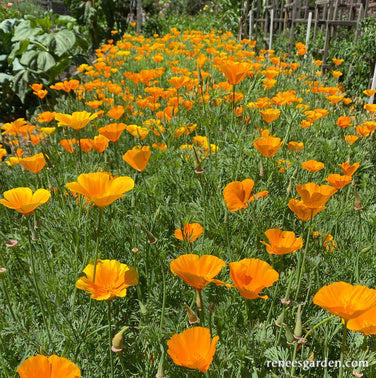
California Poppies Native Orange
PERENNIAL/GROWN AS ANNUAL
Spring/Summer bloom
Can handle light frostBEST TO START DIRECTLY IN THE GARDEN
Sow seeds directly into a finely textured, well drained garden bed in full sun as early in spring as the ground can be worked. Plant as early as possible in spring, as poppies can handle light frost and bloom best and longest when plants get a good start in cool weather. In mild winter climates, Poppies can also be sown in late fall to overwinter for spring bloom.
Except in very poor soil, these California poppies will grow and flower readily with no added fertilizer. Space seeds several inches apart, cover ¼ inch deep, and firm soil gently. Keep soil moist as seedlings emerge. If seedlings come up very thickly, thin poppies early but delay final thinning until seedlings are well established in spring. Space plants 3-4 inches apart to allow plants room to grow and bloom.
GROWING NOTES
When mature, poppy plants can handle dry conditions, but they will always bloom longer if regularly watered. Poppies are pretty cut flowers if brought indoors just as buds begin to open. At season’s end, allow spent flowers to form pods and drop seed if you want poppies to self-sow for next years flowers.Regular price $2.99Sale price $2.99Unit price per -
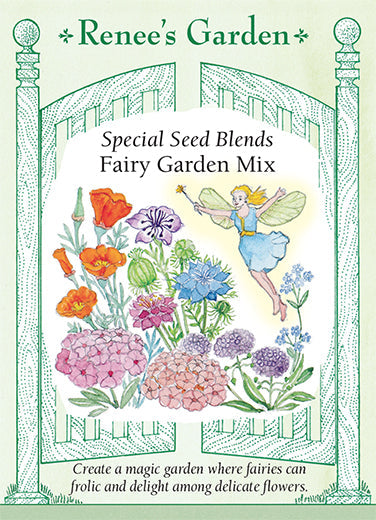
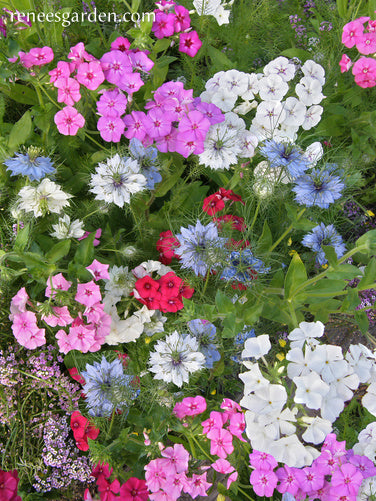
Special Seed Blends Fairy Garden Mix
ANNUAL
Spring/summer bloom
Frost tenderBEST TO START DIRECTLY OUTDOORS
In early spring, after all danger of frost is past, plant in a well-prepared garden bed in full sun. Shake packet to mix, then open and pour seeds into a container. Mix with an equal amount of sand to help space the seeds in the garden. Scatter the seed and sand mixture thinly and evenly over finely worked soil, aiming to have the seeds about an inch or so apart. Cover lightly, about 1/4 inch deep, and gently firm the soil over the seeds – a rake is handy for this step. Water thoroughly and evenly with a very gentle mist. Keep the seed bed moist while awaiting germination and while flowers are actively growing for the most blossoms.
GROWING NOTES
These pretty and delicate flowers will bloom in succession throughout late spring and provide the fairies with lots of places to play and hide, while delighting you with their pretty colors and forms. Cut tiny bouquets for the fairies – the more you pick the more blossoms you will get.
Regular price $3.69Sale price $3.69Unit price per -
Heirloom Dill Leafy Diana
EASIEST TO PLANT OUTDOORS
In early spring, sow dill seed directly into well-drained garden soil 1 to 2 inches apart in rows 6 inches apart in full sun and cover seeds 1/4 inch deep. Make small sowings every few weeks to have successive harvests of fresh leaves. Keep seed bed evenly moist while awaiting germination in 7 to 14 days.
TO START INDOORS
Sow dill seed thinly in individual pots of seed starting mix. Cover 1/4 inch deep and keep moist as seedlings emerge in 7 to 14 days. Provide a good light source. Transplant when seedlings are about 2 inches tall after gradually acclimating to outdoor conditions. Don’t let seedlings get crowded before planting outside.
THIN OR TRANSPLANT
Space groups of 2 or 3 seedlings about 4 inches apart when seedlings are large enough to handle.
GROWING NOTES
Keep plants well watered and thinned; crowded seedlings won’t make the lush growth desired for fresh leaf harvests and will form seed heads too early. Make several successive sowings for plenty of leafy dill fronds followed by seed heads to use for pickles and other savory dishes.
Regular price $4.89Sale price $4.89Unit price per