Pollinators & Beneficials
Pollinators & Beneficials
-
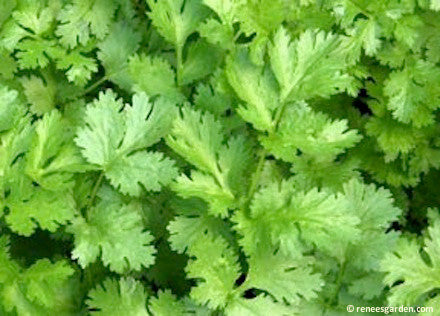
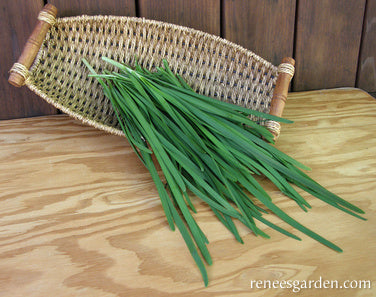
Bonus Pack Heirloom Cilantro
ANNUAL
Spring/summer/fall harvest
Can handle light frostsSTART OUTDOORS DIRECTLY INTO THE GARDEN
In early spring, sow cilantro seed directly into well-drained fertile soil 1 to 2 inches apart in wide rows in full sun. Cover 1/2 inch deep and firm soil over seeds. Keep seed bed evenly moist as seedlings emerge over 10 to 20 days. Make new sowings every few weeks until mid summer for continuous harvests of fresh leaves. Plant again in cool fall weather. Thin plants 3 to 4 inches apart before they get crowded so seedlings have room to grow.
GROWING AND HARVEST NOTES
To have a consistent supply of fresh leaves, sow wide rows of cilantro seeds successively every 2 weeks from early spring through early summer. Keep your cilantro patch at its best tasting leafy stage longer by thinning seedlings early and keeping plants well watered. Plant again when weather cools for a quick and tasty fall crop. Cilantro plants will inevitably flower and then set seed quickly when plants get mature. Their lacy white blossoms attract beneficial insects, butterflies and pollinating bees to the garden. The fragrant round seeds that follow the flowers are called coriander, a wonderfully aromatic spice used in baking.Regular price $8.99Sale price $8.99Unit price per -
Bonus Pack Seeds for A Butterfly Garden
TWO DESIGN IDEAS
Plant your butterfly garden in a rectangular bed or border with tall, medium and low flowers from back to front, OR in a circle with tall flowers in the center, surrounded by the middle and then lower growing varieties.
For the back of the border in dramatic rows, OR planted in a circle garden as a central spiral, tall, branching Crimson Queen sunflowers offer both a convenient meal and a windscreen for your winged visitors.
At mid-level, Purity Cosmos' abundant snow-satiny white flowers with sunny centers dance and sway all summer, a magnet for air-waltzing butterflies.
At front of the border OR around the outer edge of the circle, low-growing Persian Carpet zinnias offer a beautiful tapestry of warm shades and provide nectar for many species.
CREATING BUTTERFLY HABITATButterflies are attracted to blossom shapes and colors, so it's important to plant in mass blocks instead of a few isolated plants here and there. Planting these flowers behind each other produces an ideal combination of different flowers at varying heights, offering your visitors a choice of where to feed and rest.
These flowers provide flower nectar for nourishment and fuel butterflies need for flying. Flowers unique personal attributes of color, scent and shape lure butterflies and ensure pollination. With each sip from the heart of a blossom, tiny grains of pollen gather on the butterfly’s body and then it helps to pollinate the garden as it flutters among flowers.
Sunny days in the garden are synonymous with a busy freeway of flying butterflies. The sun warms their wing muscles, enabling them to dart, soar and fly seeking nectar and pollinating your sun loving flowers. On gusty summer days, the taller cosmos and sunflowers offer comfortable protection from the wind. Offer butterflies a convenient drinking spot with a shallow bird bath or decorative stone water container.
Regular price $8.99Sale price $8.99Unit price per -
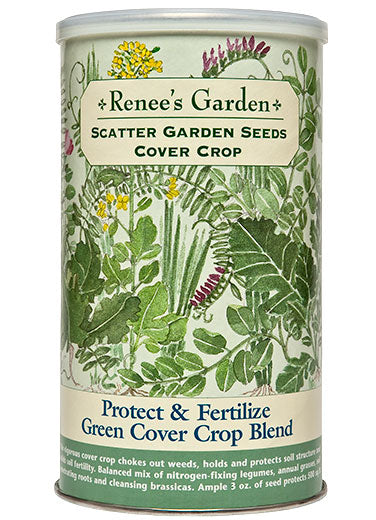
Cover Crop Cover Crop - Green Guardian
The Renee’s Garden Cover Crop Mix is a blend of several legumes, grass, roots, and rapeseed. The legumes, Austrian Winter Peas, Fava beans and Hairy Vetch all fix nitrogen from air into their root nodules, loosen and aerate dense soil and gather deep nutrients and minerals. Winter Rye Grass has thick roots which hold the soil to prevent erosion and takes up excess nutrients in the soil. Rapeseed takes up large amounts of nutrients that would otherwise be leached out of the soil by the winter rains. When these cover crop plants are incorporated back into the soil in the spring, they break down releasing the nutrients and minerals back into the soil and add plenty of organic matter which improves the soil structure.
NOTE
Seed is packed with a larger quantity of organic rice hulls to help space seeds. Before opening, shake can thoroughly to mix together.
FORMULA MIX
Winter Rye, Hairy Vetch, Fava Bean, Rapeseed and Austrian Winter Peas.
Inert material: organic rice hulls.
WHEN TO PLANT
In Mild Winter Climates, where ground does not freeze hard, sow in late fall to over-winter for spring growth.
In Cold Winter Climates, where ground freezes hard, plant in fall for winter die back and then incorporate in spring, OR sow as early as possible in spring.
HOW TO PLANT AND GROW
Remove all weeds, grass and large stones from the planting area and break up soil clumps. Evenly loosen the top 2 inches of soil with a rake. Shake the can thoroughly before opening, then scatter contents evenly over the prepared ground, aiming for scattering the seeds 1 to 2 inches apart. Use a rake to cover the seed mixture with fine soil 1/4 to 1/2 inch deep. Lightly firm soil with the back of the rake and water thoroughly. Keep soil bed evenly moist while awaiting germination and while seedlings are small. Plants will grow and thrive best if watered regularly.
INCORPORATING YOUR COVER CROP
Method 1: When 5 to 6 inches tall, use a garden fork, shovel or rototiller to turn the cover crop into the ground to break down and enrich soil for planting. The breakdown process takes about a month.
Method 2: When cover crop is 1 foot tall, pull out the plants, shake off soil and then compost the plant material to incorporate it into the soil later, when it has turned into rich, finished compost. Timing depends how long your composting process takes.
Method 3: When cover crop reaches 1 to 1-1/2 feet tall, weed whack to chop it down. Cover the chopped material with black plastic to hasten decomposition, then turn the nutritious residue into the soil 2 to 3 weeks before sowing your garden crops.
Regular price $19.95Sale price $19.95Unit price per -
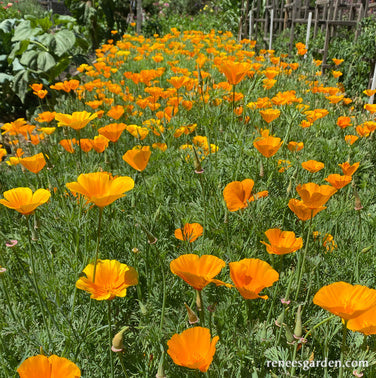
California Native Orange Poppies
NOTE
The Poppy seeds in this can are packed with a larger quantity of milled rice hulls to help space the tiny seeds when scattering.
Before opening, shake the can thoroughly to mix them together so when you cast the seeds they are spaced with room for the plants to grow.
HOW TO PLANT
In mild winter climates, where the ground does not freeze hard, poppies can be sown in late fall to overwinter for spring bloom. Or, plant as early as possible in spring, as poppies can handle light frosts and bloom longest when given a good start in cool weather.
To prepare the planting area: remove all weeds, grass and large stones. Break up soil clumps and evenly loosen the top 2 inches of soil with a digging fork or shovel, then smooth out with a flat rake.
Shake the can thoroughly before opening, then scatter the contents thinly and evenly over the prepared ground. Using your rake, cover the seed mixture 1/4 inch deep and lightly firm the soil. Water with a gentle mist thoroughly and evenly. Keep the soil moist while awaiting germination and while the seedlings are small.
GROWING NOTES
Mature poppy plants can handle dry conditions, but will thrive and bloom much longer if watered regularly. Poppies make lovely cut flowers if brought indoors just as the buds begin to open. At season’s end, let spent flowers form pods and drop seeds to bloom again the next spring.
Regular price $16.95Sale price $16.95Unit price per -
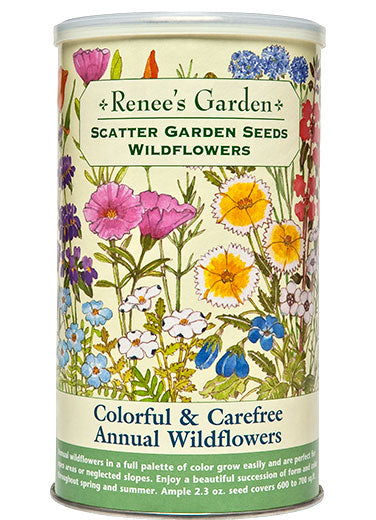
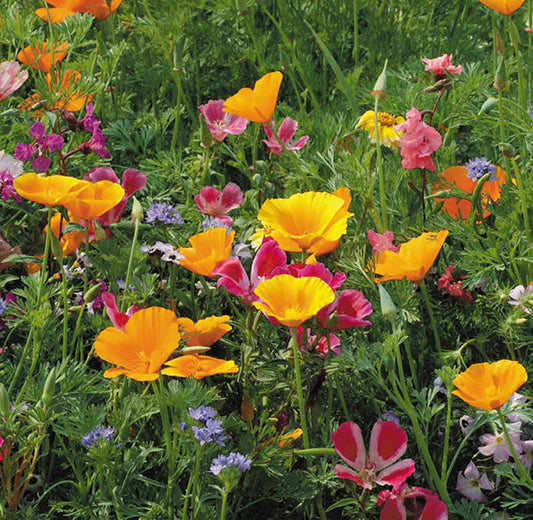
Colorful & Carefree Annual Wildflowers
NOTE
Seeds are packed with a larger quantity of milled rice hulls to help space the tiny seeds when scattering. Before opening, shake the can thoroughly to mix them together so when you cast the seeds they are spaced with room for the plants to grow.
HOW TO PLANT
As soon as the ground can be worked in early spring, plant the seeds in ordinary garden soil in full sun. In mild climates, where the ground does not freeze hard in winter, seeds can also be planted in late fall to overwinter and bloom the next spring.
To prepare the planting area: remove all weeds, grass and large stones. Break up soil clumps and evenly loosen the top 2 inches of soil with a digging fork or shovel, then smooth out with a flat rake.
Shake the can thoroughly before opening, then scatter the contents thinly and evenly over the prepared ground. Using your rake, cover the seed mixture 1/4 inch deep and lightly firm the soil. Water with a gentle mist thoroughly and evenly. Keep the soil moist while awaiting germination and while the seedlings are small.
GROWING NOTES
When wildflower plants are mature they can handle somewhat dry conditions, but will thrive and bloom much longer if watered regularly. For indoor bouquets, cut the flowers as blossoms open. At season’s end, let spent flowers form pods and drop seeds to bloom again the next spring.
WILDFLOWER MIX
INDIVIDUAL VARIETY NAMES MIX% Candytuft
Iberis umbellata18 Baby Blue Eyes
Nemophila menziesii
16 Five Spot
Nemophila maculata
16 Chinese Houses
Collinsia heterophylla12 African Daisy
Dimorphotheca aurantiaca8 CA Poppy
Eschscholzia californica7 CA Bluebell
Phacelia campanularia5 Shirley Poppy
Papaver rhoeas5 Bird’s Eyes
Gilia tricolor4 Dwarf Godetia
Clarkia amoena2 Clarkia
Clarkia unguiculata2 Globe Gilia
Gilia capitata2 Tidy Tips
Layia platyglossa2 Inert Material: Clean milled rice hulls NOTE
The seed mix is packed with a larger quantity of organic rice hulls to help space the tiny seeds. Before opening, shake canister thoroughly to mix them together.
Regular price $16.95Sale price $16.95Unit price per -
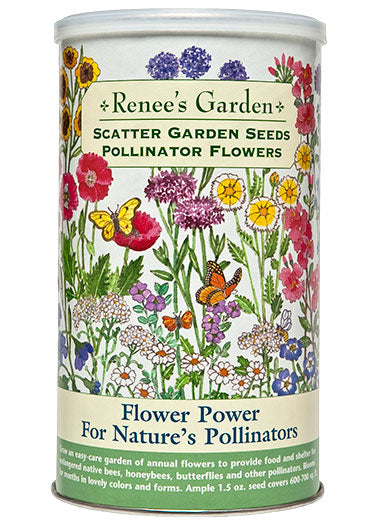
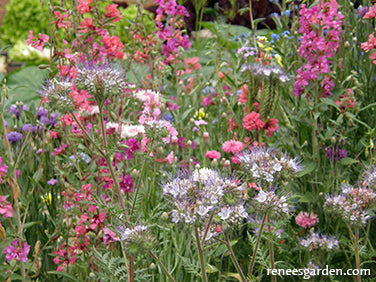
Flower Power For Nature's Pollinators
NOTE
The seed mix is packed with a larger quantity of organic rice hulls to help space the tiny seeds. Before opening, shake canister thoroughly to mix them together.
HOW TO PLANT
As soon as ground can be worked in early spring, sow mix in ordinary garden soil in full sun. In mild climates, where the ground does not freeze hard in winter, seeds can also be planted in late fall to overwinter and bloom the next spring.
Prepare the planting area by removing all weeds, grass and large stones. Break up soil clumps and evenly loosen the top 2 inches of soil with a digging fork or shovel, then smooth out with a flat rake.
Shake the can thoroughly, then scatter the contents thinly and evenly over the prepared ground. Using your rake, lightly cover the seed mixture, about 1/4 inch deep, and then lightly firm the soil. Water thoroughly and evenly with a gentle mist. Keep soil bed evenly moist while awaiting germination and when the seedlings are small. Water regularly for best blossoms.
GROWING NOTES
Plants will flower in succession and bloom much longer if watered regularly. At season’s end, allow spent flowers to form pods and then drop their seeds to bloom again next spring.
ANNUAL POLLINATOR FLOWER MIX
INDIVIDUAL VARIETY NAMESMIX% Chinese Forget-Me-Not19.6Baby Blue Eyes19.6 Single Chinese Aster9.8 Cornflower, ‘Polka Dot Mix’9.8Shirley Poppy
7.8 Sweet Mignonette
7 Tidy Tips
4.9 Virginia Stock10 Creeping Daisy3 Clarkia3 Globe Gilia2.9 Lemon Mint2 California Bluebell2 Lacy Phacelia1.5 Tall White Alyssum1 Plains Coreopsis1 Inert Material: Organic rice hulls Regular price $16.95Sale price $16.95Unit price per -
Heirloom Herbs Garlic Chives
PERENNIAL
Spring/summer/fall harvest
Frost hardyTO PLANT DIRECTLY OUTDOORS
In the cool weather of early spring, sow clusters of 7 to 10 seeds 8 to 10 inches apart in well-worked, fertile soil in sun or part shade. Cover 1/4 inch deep and press soil firmly over seeds. Keep evenly moist as seeds germinate slowly over several weeks. Emerging seedlings have slender, straight leaves.
TO START EARLY INDOORS
In early spring, sow seed thinly in a container of seed starting mix and cover 1/2 Inch deep. Keep evenly moist as seedlings slowly emerge and provide a good light source. Gradually acclimate to outdoor conditions before transplanting clusters of 7 to 10 seedlings, planting each cluster 8 inches apart.
GROWING NOTES
Garlic chives grow slowly at first, but soon mature into sturdy bright green mounds crowned with pretty white edible blossoms. After bloom finishes, shear entire plant back to 4 inches to encourage regrowth of tender new leaves. These hardy, self-sufficient plants are attractive additions to the flower or herb garden.Regular price $4.89Sale price $4.89Unit price per -
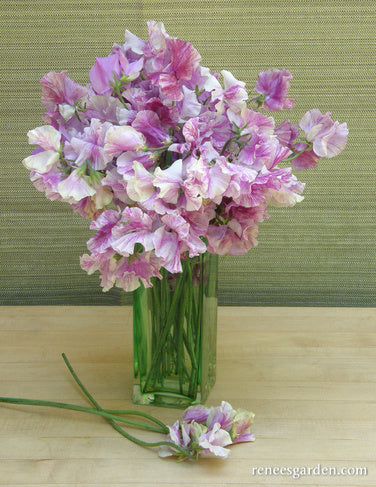
Fragrant Sweet Peas Raspberry Twirl
ANNUAL CLIMBING VINE
Spring/summer bloom
Frost tolerantEASIEST TO START OUTDOORS
Sweet peas must have well drained soil, so dig deeply and enrich with aged manure or compost before sowing seeds. Erect a well-anchored trellis, vertical netting or other support for vines before planting. Sow seeds in full sun in cool early spring weather as early as the ground can be worked.
In mild winters, where ground does not freeze, sweet peas can be planted in fall. Seedlings will form strong root systems, then overwinter to bloom vigorously in spring. Plant sweet pea seeds 1 inch deep and 2 to 3 inches apart. When seedlings are 2 inches tall, thin to 4-5 inches apart to allow plants room to mature.
GROWING NOTES
Sweet peas bloom best when they flower before the weather gets too hot, so if spring planting, sow as early as possible, especially in regions where summer heat comes on fast. Anchor climbing supports well as these vines will grow dense and heavy with bloom. Protect seedlings from birds, slugs and snails. Mulch and keep well watered for best flower production. For longest bloom, remove faded blossoms regularly.Regular price $3.99Sale price $3.99Unit price per -
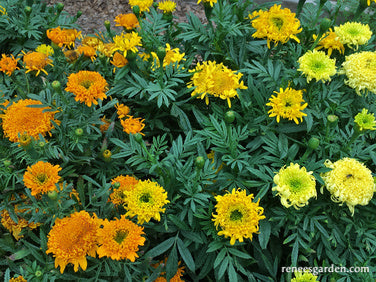
Butterfly Flowers Spinning Wheels Marigolds
ANNUAL
Summer/fall bloom
Frost tenderTO PLANT OUTDOORS
Sow seeds directly into well-worked garden soil in full sun once all danger of frost is past. Space seeds several inches apart and cover about 1/4 inch deep. Keep soil evenly moist while awaiting germination in 7 to 10 days. When seedlings are well established, thin them to a final spacing of 8 to 10 inches apart so these vigorous plants have room to grow and bloom. Extra thinned seedlings can be transplanted easily.
TO START EARLY INDOORS
Sow seeds several inches apart in a container of well-drained seed starting mix 4 to 6 weeks before last expected frost date. Cover 1/4 inch deep, keep moist and provide a strong light source until ready to go outside. Transplant 8 to 10 inches apart once weather warms up after gradually acclimating seedlings to outdoor conditions.
GROWING NOTES
These cheerful marigolds are quick to bloom, carefree and non-fussy. Their profusion of long lasting flowers and handsome blue-green foliage is perfect in any sunny spot and makes long blooming handsome borders. Feed and water regularly. No need to pinch these self branching productive plants. Both butterflies and pollinators of all kinds are attracted to these flowers throughout the season.
Regular price $3.39Sale price $3.39Unit price per -
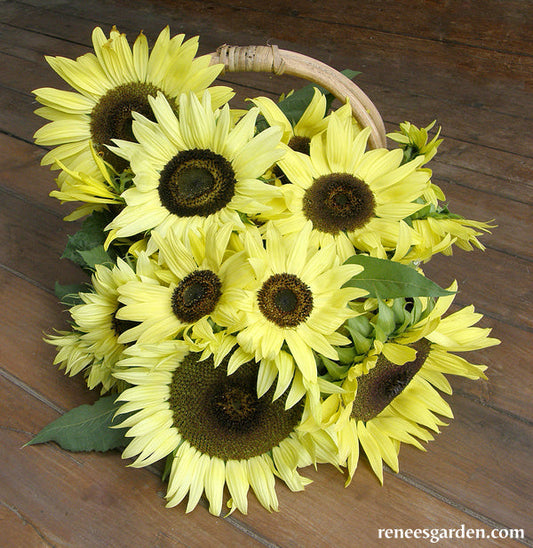
Pollinator Sunflowers Lemon Queen
ANNUAL
Summer/fall bloom
Frost tenderEASIEST TO DIRECTLY PLANT OUTDOORS
Plant in full sun in good garden soil only when weather is warm and settled, all danger of frost is past and both days and nights are evenly in the 50°F (10°C) range. Poke individual seeds into well-worked soil about 1/2 in. deep, 4 to 5 in. apart. Press the soil firmly over the seeds and keep the seedbed evenly moist until seedlings emerge in 8 to 10 days.
Important: when the seedlings are well-established, carefully thin them to a final spacing of 1 foot apart; this way they will have enough room to develop sturdy stalks that won’t blow over and big clusters of flowers. Any extra seedlings you remove can be transplanted elsewhere in the garden or potted up and given to friends.
GROWING NOTES
Growing these colorful sunflowers for pollinators and bouquets is both easy and rewarding. Make several sowings several weeks apart and you’ll have a succession of flowers in full bloom. Keep soil moist and well weeded and protect very young seedlings from birds with bird netting held tautly above the seedbed with supports, or use plastic berry baskets, removing baskets before plants get crowded.Regular price $3.39Sale price $3.39Unit price per -
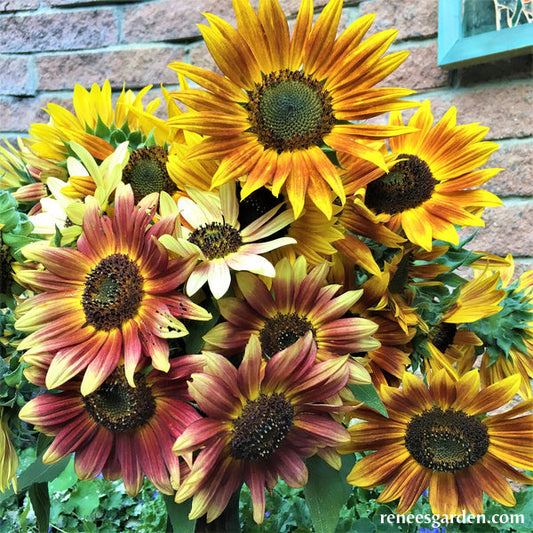
Pollinator & Songbird Sunflowers Paintbox Bouquet
ANNUAL
Summer/fall bloom
Frost tenderEASIEST TO PLANT OUTDOORS
Plant in full sun in good garden soil when weather is warm and settled, all danger of frost is past and both days and nights are evenly in the 50°F (10°C) range. Poke seeds into well-worked soil about 1/2 in. deep, 4 to 5 in. apart. Press soil firmly over seeds and keep moist until seedlings emerge in 8 to 10 days. Important: when seedlings are well-established, thin them to a final spacing of 1 foot apart so plants can grow sturdy stalks and big flowers. Extra seedlings can be transplanted easily.
TO START EARLY INDOORS
Several weeks before last frost date, sow seeds ½ inch deep in individual pots of well-drained seed starting mix. Keep moist and provide a strong light source until seedlings are well established and ready to plant outside. Transplant carefully, disturbing the roots as little as possible. Space seedlings 1 foot apart so plants will have room to grow and mature.
GROWING NOTES
Growing these colorful sunflowers for pollinators and bouquets is both easy and rewarding. Make several sowings several weeks apart to have a succession of flowers in full bloom. Keep soil moist and well weeded and protect very young seedlings from birds with netting or plastic berry baskets, removing before plants get crowded.
Regular price $4.89Sale price $4.89Unit price per -
Giant Harvest Gourds Lunch Lady
BEST TO START SEEDS INDOORS
Several weeks before last spring frost date, sow 2 seeds each, 1 in. deep, in individual pots of potting mix. Keep warm and moist and provide a strong light source. When nights stay above 50°F (10°C), thin to one seedling per pot and gradually acclimate to outdoors. Transplant at along a sturdy fence or trellis to climb effortlessly and form a lush canopy or allow vines to ramble at garden edges.
START DIRECTLY OUTDOORS
Sow seeds directly outdoors only if you have a long growing season. Sow only after night temperatures stay solidly above 50°F. (10°C). In full sun, sow seeds 1 inch deep and 4 inches apart along a garden fence or sturdy trellis or along garden edges. Thin seedlings to final spacing 8 inches apart.
GROWING NOTES
Unique Lunch Lady gourds need full sun, rich soil and warm temperatures. For earliest and best yields, hand-pollinate gourds: pick a blooming male flower and dust pollen onto fresh female flowers (the ones with small fruits at the base).
Repeat as new flowers appear. Pollinated fruits start growing larger within several days. Gourds are mature when rinds are tough and the tendril next to the stem turns brown. Harvest with several inches of stem. Dry in a well-ventilated place.
Note: the flesh of Lunch Lady ornamental gourds has a bitter gene and is not edible.Regular price $4.69Sale price $4.69Unit price per -
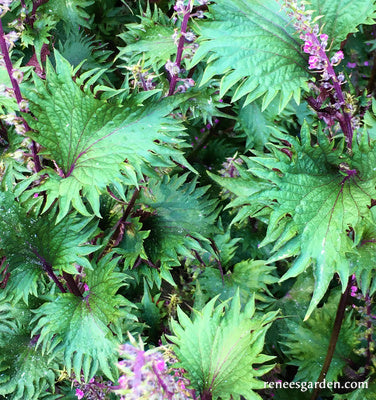
Ornamental Edibles Bicolored Shiso
ANNUAL
Summer/fall harvest
Heat-loving, frost tenderTO PLANT DIRECTLY INTO THE GARDEN
When late spring weather has thoroughly warmed up, sow seeds 1 inch apart in well worked fertile soil in full sun. Cover 1/4 inch deep, firm soil and keep seedbed moist. Germination takes 1 to 2 weeks. After seedlings are well established, thin or transplant 8 inches apart to allow plants room to mature.
TO START EARLY INDOORS
Sow seeds 1 inch apart in a container of seed starting mix, 4 to 6 weeks before last expected frost. Keep warm and evenly moist, and provide a good light source. When seedlings are large enough to handle and night temperatures are solidly above 50°F (10°C ), acclimate gradually to outdoor conditions before planting in the garden 8 inches apart.
GROWING NOTES
Remember— it is critical to plant Shiso in the garden only after day and nights are solidly above 50°F (10°C). Pinch off growing tips when plants are 6 to 8 inches tall to encourage branching. Harvest sprays of leaves by cutting stems just above two new sprouting lateral branches to get lush regrowth.
NOTE: Can self-sow aggressively. Keep plants from spreading by cutting spent flowers so they don't drop seeds. Do not plant near natural areas.
Regular price $3.99Sale price $3.99Unit price per -
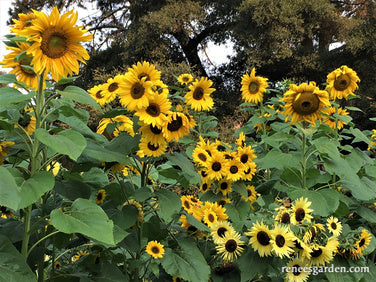
Bonus Pack An Heirloom Sunflower Forest
ANNUAL
Spring/summer bloom
Frost tenderEASIEST TO PLANT OUTDOORS
Plant in full sun in good garden soil only when weather is warm and settled, all danger of frost is past and both days and nights are evenly in the 50°F (10°C) range. Poke individual seeds into well-worked soil about 1/2 in. deep, 4 to 5 in. apart. Press the soil firmly over the seeds and keep the seedbed evenly moist until seedlings emerge in 8 to 10 days.
Important: when the seedlings are well-established, carefully thin them to a final spacing of 1 foot apart; this way they will have enough room to develop sturdy stalks that won’t blow over and big clusters of flowers. Any extra seedlings you need to remove can be transplanted elsewhere in the garden or potted up and given to friends.
TO START EARLY INDOORS
Several weeks before last frost date, sow seeds 1/2 inch deep in individual pots of well-drained seed starting mix. Keep moist and provide a strong light source until seedlings are well established and ready to plant outside. Transplant carefully, disturbing the roots as little as possible. Space seedlings 1 foot apart so plants will have room to grow and mature.
GROWING NOTES
Growing these colorful sunflowers for pollinators and bouquets is both easy and rewarding. Make several sowings several weeks apart and you’ll have a succession of flowers in full bloom. Keep soil moist and well weeded. Protect very young seedlings from bird predation by covering the bed with bird netting held tautly well above seedlings by supports. Or use plastic berry baskets, removing before plants get crowded.
Regular price $8.99Sale price $8.99Unit price per -
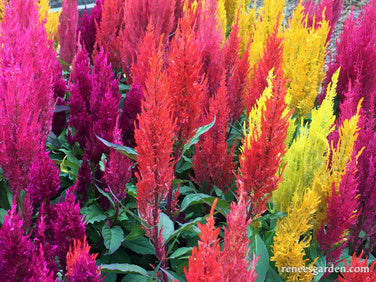
Rainbow Plume Celosia Hippie Tie Dye
ANNUAL
Summer/fall color
Frost tenderBEST TO START EARLY INDOORS
Six weeks before last expected frost date, sow seeds 1 inch apart in a container of seed starting mix. Cover very lightly, no more than 1/8 inch. Keep warm and moist and provide a strong light source until seedlings are ready to plant out in the garden. Feed every 2 weeks with half-strength fertilizer.
Seedlings are ready to transplant when they are large enough to handle and night temperatures are evenly in the 50°F (10°C) range. Gradually acclimate seedlings to outdoor conditions, then plant in full sun 6 to 8 inches apart in rich, fertile soil.
TO START OUTDOORS
Sow seeds in a well-drained, finely textured seed bed in full sun when weather is warm and nights are above 50°F (10°C). Space seeds 2 to 3 inches apart and cover very lightly, then gently firm soil. Keep soil evenly moist while awaiting germination When seedlings are large enough to handle, thin or transplant 6-8 inches apart in full sun.
GROWING NOTES
Seedlings grow slowly at first, then vigorously by midsummer. Good drainage is essential. The dramatic plumes in their eye-catching color collage bloom hard and last all summer. Cut for colorful bouquets or hang bunches upside down inside to air dry as “everlasting” flowers.Regular price $4.99Sale price $4.99Unit price per -
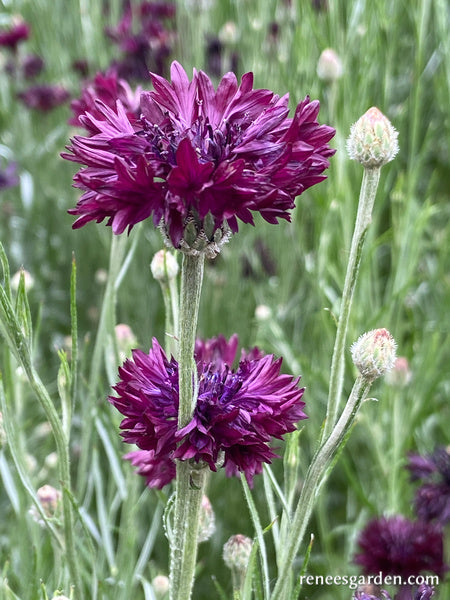
Heirloom Cornflowers Velvet Dawn
HARDY ANNUAL
Spring/summer bloom
Can handle light frostTO START OUTDOORS
Sow seeds in a finely textured garden bed in full sun as soon as soil can be worked. In mild winter areas, where the ground doesn’t freeze, plant in fall for next spring’s bloom. Space seeds 1 to 2 inches apart and cover ½ inch deep. Keep seed bed moist until seedlings emerge in 7 to 10 days. Weed and water carefully. Thin seedlings to 6 to 8 inches apart.
TO START EARLY INDOORS
Sow seeds 1 to 2 inches apart in a container of seed starting mix, 2 or 3 weeks before last expected frost. Cover 1/2 inch deep, keep moist and provide a good light source until seedlings are transplanted outside. Plant 6 to 8 inches apart into fertile garden soil in full sun when plants are 3 to 4 inches tall. Seedlings grow quickly; plant out before the roots get crowded.
GROWING NOTES
In mild winter areas the best Cornflowers (aka Bachelor Buttons) result from seeds sown in fall to bloom the next spring. In cold winter areas where ground freezes, plant in early spring to get sturdy plants that will flower for many weeks if faded blossoms are removed.
Regular price $3.39Sale price $3.39Unit price per -
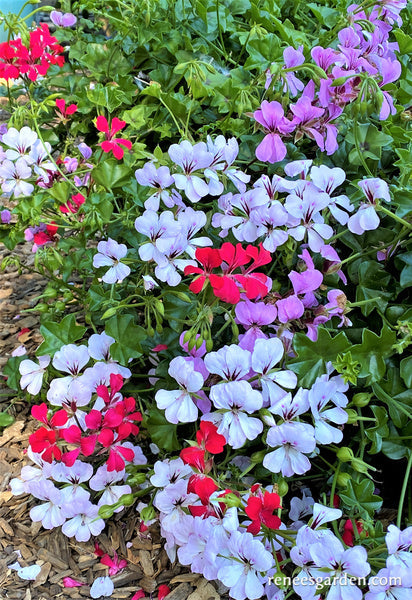
Pelargonium Fancy Pants
PERENNIAL
Spring/summer/fall bloom
Frost tenderBEST TO START SEEDS EARLY INDOORS
In early spring, 8 to 10 weeks before last expected frost, sow seeds 1 inch apart in a container of seed starting mix. Cover lightly, no more than 1/4 inch deep, keep moist and about 65-75°F (18-24°C). Provide a strong light source until ready to plant outdoors. Feed seedlings every 2 weeks with half-strength liquid fertilizer. Once large enough to handle, move seedlings into individual 3-4 inch containers to develop root systems. When weather is above 55°F (13°C) night and day, acclimate 3-4 inch long seedlings outdoors, then transplant into final containers.
CONTAINER GROWING
Choose hanging baskets, pots or windowboxes at least 12-15 inches in diameter and 8-10 inches deep. Fill with well moistened fresh potting mix. Transplant well developed seedlings into containers, spacing them 4 inches apart. Gently water after planting. Keep containers in a filtered sun location or a spot with afternoon shade.
GROWING NOTES
Keep Pelargoniums well watered all summer and mulch pots well to retain soil moisture. Feed them with good all-purpose fertilizer twice a month according to package directions. Remove spent flowers and seedpods to encourage reblooming.
Regular price $4.99Sale price $4.99Unit price per -
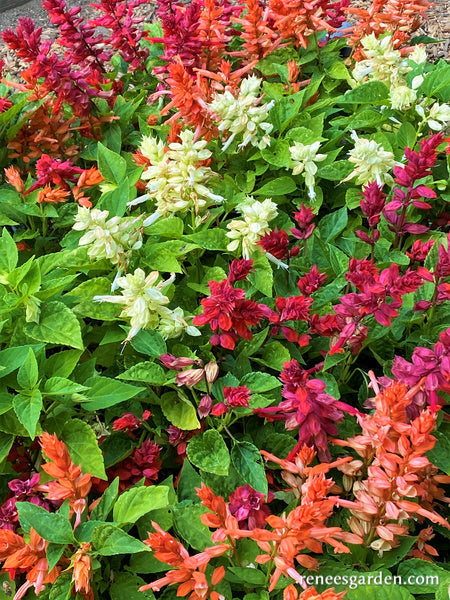
Hummingbird Salvia Firelight Mix
TENDER PERENNIAL
Grown As Annual
TO START EARLY INDOORS
Five to six weeks before last frost date, sow seeds 1/2 inch deep and 2 inches apart in a container of seed starting mix. Keep moist and provide a strong light source until seedlings are ready to plant in the garden. Acclimate seedlings gradually to outdoor conditions when night temperatures are regularly above 50°F (10°C). Space seedlings 10 to 12 inches apart in the garden.
TO START DIRECTLY OUTDOORS
Sow seeds in a well-worked seed bed in full sun when all danger of frost is past and weather is warm and settled. Space seeds 4 to 5 inches apart in rows 12 inches apart, cover about 1/2 inch deep and gently firm soil. Keep soil evenly moist while awaiting germination in 10 to 20 days.
GROWING NOTES
Firelight’s bright blossoms in three complementary shades will glow in garden beds or as container flowers. Use these warm colors to advantage in summer bouquets to add texture, color and form. You’ll find our Firelight Salvia is a low-maintenance plant, but removing spent flower heads will encourage more extended flowering.
Regular price $3.99Sale price $3.99Unit price per -
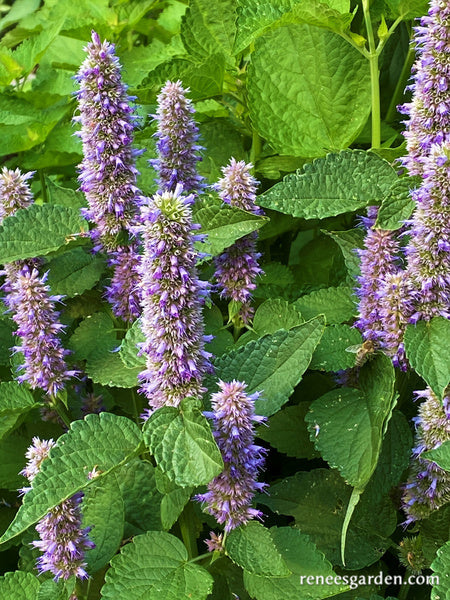
Pollinator Herbs Root Beer Hyssop
FROST TENDER PERENNIAL
Spring to fall bloom
Frost tenderTO START EARLY INDOORS
Sow seeds 1 inch apart in a container of well-drained seed starting mix 4 to 6 weeks before last expected frost date. Cover 1/4 inch deep, keep moist and provide a strong light source until ready to go outside. Transplant into individual containers once seedlings have 2 to 3 sets of true leaves. Transplant into garden once weather warms up after gradually acclimating seedlings to outdoor conditions.
TO PLANT OUTDOORS
Sow seeds directly into well-worked garden soil in full sun once all danger of frost is past. Space seeds 3 inches apart and cover about 1/4 inch deep. Keep soil evenly moist while awaiting germination in 10 to 14 days. See final spacing below.
PLANT SPACING
When well established, thin or transplant seedlings 9 to 12 inches apart so plants have room to mature. You can transplant extra seedlings when thinning.
GROWING NOTES
Throughout summer, multiple purple-blue flower spikes attract myriads of honeybees, butterflies and other important garden pollinators. Cut spent spikes to encourage reblooming all season. Use the sweet licorice scented leaves in Asian style stirfries and add to herbal teas. Plants will overwinter in mild climates.Regular price $3.69Sale price $3.69Unit price per -
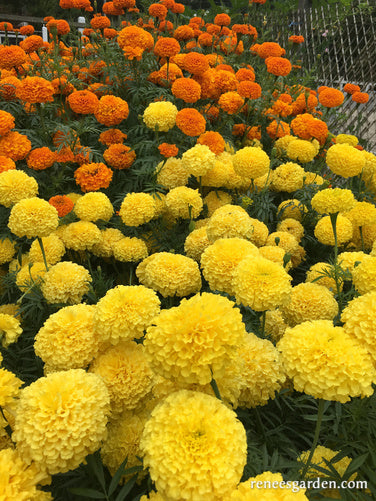
Giant Bouquet Marigolds Orange & Yellow Beast
ANNUAL
Summer/fall bloom
Frost tenderTO PLANT OUTDOORS
Sow seeds directly into well-worked garden soil in full sun once all danger of frost is past. Space seeds 3 inches apart and cover about 1/4 inch deep. Keep soil evenly moist. Germination takes 7 to 10 days. When seedlings are about 3 inches tall, carefully thin them to a final spacing of 9-12 inches apart because these vigorous, tall plants need room to grow and bloom. Extra thinned seedlings can be transplanted easily.
TO START EARLY INDOORS
Sow seeds several inches apart in a container of well-drained seed starting mix 4 to 6 weeks before last expected frost date. Cover 1/4 inch deep, keep moist and provide a strong light source until ready to go outside. Transplant 9-12 inches apart once weather warms up and nights are above 55° F (13° C).
GROWING NOTES
These carefree, non-fussy branching plants reach 3-3 1/2 feet tall with long-lasting big blossoms and blue-green foliage. Perfect in any sunny spot for nonstop color all season long with armfuls of long stemmed flowers for big bouquets. Support the tall, hard blooming plants with stakes or flower supports. Feed and water regularly. No need to pinch plants or remove spent flowers for spectacular long bloom.
Regular price $4.69Sale price $4.69Unit price per -
Heirloom Dwarf Zinnias Thumbelina Mix
ANNUAL
Summer/fall bloom
Frost tenderEASIEST TO PLANT OUTDOORS
After danger of frost is past, sow seeds in full sun in well-worked soil. For container sowing, use fresh potting mix. Space seeds 2 inches apart, cover about 1/2 inch deep and gently firm soil. Keep soil evenly moist while awaiting germination. When seedlings are several inches tall, thin to final spacing: For Containers, space plants 4 inches apart; In Garden Beds, space 8 inches apart.
TO START EARLY INDOORS
Several weeks before last frost date, sow seeds 1/2 inch deep and 2 inches apart in a container of seed starting mix. Keep warm and moist and provide a strong light source until ready to plant outdoors. Transplant carefully before plants get too large.
CONTAINER GROWING
Use containers a minimum of 12 inches in diameter and 12 inches deep. Fill with well moistened, fresh potting mix.
GROWING NOTES
These carefree 12 to 16 inch tall zinnias perform well in hot and sunny conditions. Thin young seedlings to final spacing before too large. Water regularly and consistently. Support plants’ rapid growth by feeding with an all-purpose fertilizer every few weeks. Remove spent flowers often to encourage new blooms.Regular price $3.39Sale price $3.39Unit price per -
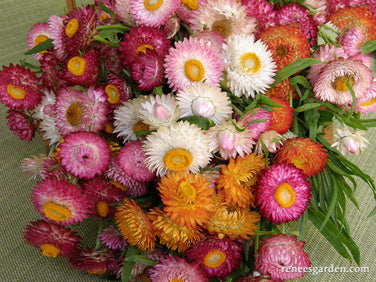
Dwarf Strawflower Rainbow Bouquet
ANNUAL
Summer/fall bloom
Can handle light frostSTARTING EARLY INDOORS
Start in spring 6 weeks before last expected frost. Sow seeds very thinly in a container of seed starting mix and cover very lightly. Keep evenly moist but not soggy, providing a strong light source. When seedlings are several inches tall, transplant 2 inches apart into a deeper containers. Once weather is settled and warm, acclimate to outdoor conditions before planting in the garden.
TO START EARLY OUTDOORS
Once all danger of frost is past, sow seeds 1 inch apart in containers of fresh potting mix, or broadcast thinly in fertile, well drained garden beds. Cover ¼ inch deep and keep evenly moist. When seedlings are several inches tall, thin to 6-8 inches apart so plants have room to branch and grow.
In Containers: Use containers 16-18 inches deep and wide filled with fresh potting soil. Sow seeds 1 inch apart, 1/4 inch deep. When several inches tall, thin or transplant seedlings 5 inches apart. Feed container plants monthly with all-purpose flower fertilizer.
GROWING NOTES
For fresh flowers, cut stems at desired length before the flower centers are fully open. To air dry for “everlastings,” simply remove leaves and hang upside down in bundles in a cool airy spot out of the sun. Dried Strawflowers cure quickly and last almost indefinitely.Regular price $3.69Sale price $3.69Unit price per -
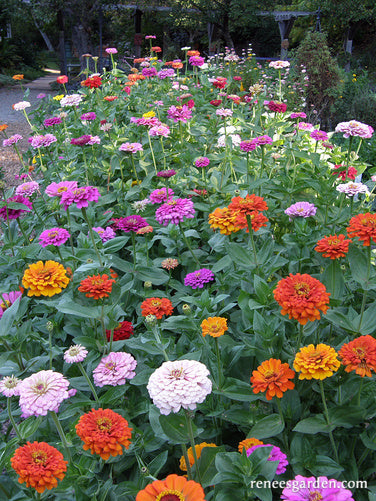
Heirloom Rainbow Flowers Colorful, Carefree Zinnias
NOTE
Seeds in this canister are packed with a larger quantity of organic rice hulls to help space them. Before opening, shake canister thoroughly to mix.
HOW TO PLANT AND GROW
When spring weather is warm and settled, and nights are reliably above 50°F (10°C), prepare planting area by removing all weeds, grass, stones and large clumps. Loosen the top 2 inches of soil with a digging fork or shovel, then smooth with a flat rake.
Scatter mix thinly and evenly. Using your rake, work to cover the seeds with 1/2 inch of soil, then use planting mix or compost to cover any exposed seed mix. Water thoroughly with a gentle mist.
Protect tiny seedlings from birds by using netting or ribbons of shiny, reflective flash tape at planting time. Keep weeded and watered; when 3 inches tall, remove covering and thin seedlings to 8-10 inches apart for good air circulation and enough elbow room to grow, branch and bloom freely.
HARVEST AND USE
For bouquets, pick just as flowers open, cutting long stems well back into the plant to keep them branching. Butterflies, bees, and other native pollinators will seek out and work these pretty flowers that provide them with nectar, pollen and shelter.
Zinnias are carefree and long-lasting, but will thrive and bloom longer with proper thinning, regular watering and several applications of organic fertilizer over their long flowering season.
Regular price $16.95Sale price $16.95Unit price per -
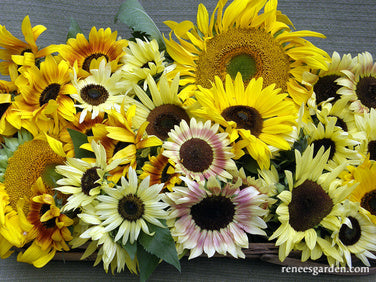
Heirloom Summer Garden Dancing, Joyous Sunflowers
NOTE
Seeds in this canister are packed with a larger quantity of organic rice hulls to help space them. Before opening, shake canister thoroughly to mix.
HOW TO PLANT AND GROW
When spring weather is warm and settled, and nights are reliably above 50°F (10°C), prepare the planting area by removing all weeds, grass, large clumps and stones. Loosen the top 2 inches of soil with a digging fork or shovel, then smooth with a flat rake.
Scatter mix thinly and evenly. Using your rake, work to cover the seeds with 1/2-1 inch of soil, then use planting mix or compost to cover any exposed seed mix. Water thoroughly with a gentle mist.
Keep weeded and watered; protect tiny seedlings from birds by using netting or ribbons of shiny, reflective flash tape at planting time. When 3-4 inches tall, remove covering and thin seedlings to 10-12 inches apart. This spacing is critical for sturdy, windproof plants with good root systems and large flowers.
HARVEST AND USE
For bouquets, cut when flowers just begin to open. Many diverse pollinators will busily visit the florets in each flower head and seeds will begin to mature. When the center disk florets have dried, birds will happily snack on ripening seed heads.
Harvest for winter feeding by covering ripening heads with paper bags until kernels are plump and hard shelled. Cut entire heads; store until cool and dry, then remove seeds. Store in closed containers to feed as needed.
Regular price $16.95Sale price $16.95Unit price per